
Koert Lindijer has been a correspondent in Africa for the Dutch newspaper NRC since 1983 to 2026. He is the author of four books on African affairs.
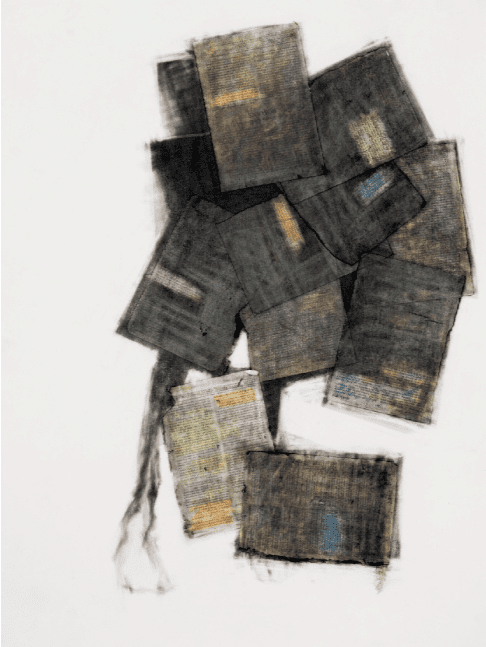
Lemek Sompoika struggles with modern existence. “I used to depict figures, but over time they became more abstract. It is like an inquiry into truth: the truth is abstract,” he says. In his latest series of works for the exhibition Fading Identities, the figures even threaten to disappear beneath pasted-on pages from the Bible. With these artworks, he expresses that imposed religion threatens his own identity—Sompoika’s—and crushes spirituality—that of the Maasai. “They say that if you tear a page out of the Bible, you will be struck by lightning,” says Sompoika. “But by the time I was working on the third or fourth Bible, I didn’t worry so much anymore about whether it was sacrilege.”
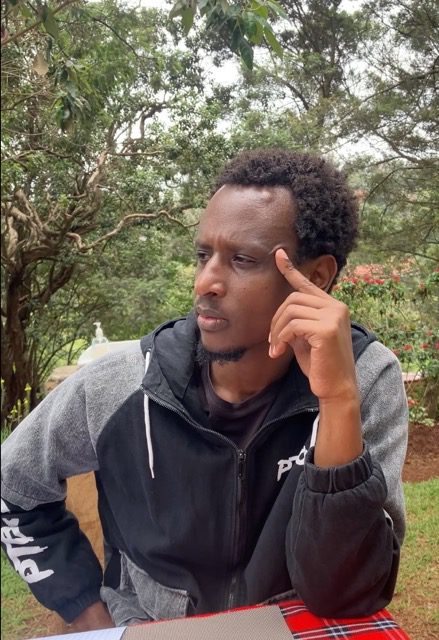
Sompoika, born in Ngong Hill in 1988, began reflecting on his identity in 2017. “What I was, how I saw myself, was defined by Christianity. Those are now my ‘fading identities’; now I have gone in search of myself, now I take my Maasai identity as a starting point.”
He acknowledges that tearing pages from the Bible can hurt people. “It felt very wrong; it felt like you were doing something forbidden. I felt very guilty about it. But at the same time, I felt I had to do it. I had no choice, because I really wanted to use the Bible as material. I think this exhibition creates a kind of platform, it creates precisely that space for a conversation.”
A Maasai believes in a specific god and has certain customs. He has his own way of life. That is his spirituality. Sompoika is not against the church; he has problems with the religion that does not give you the freedom to ask questions. “My work provides an opportunity to reshape our societies based on our history.”
The search for his identity separate from Christianity does not lead to a simple answer; perhaps that quest is eternal. “To understand spirituality at all, I must understand where I come from. I do not exist in a vacuum. The Maasai did not have a religion in the strict sense of the word, but we had spirituality. Spirituality is a way to connect with your creator, or with what you believe to be a higher power or a higher being. Current religion does not fulfill that spiritual identity.”
His birthplace, Ngong, which borders Nairobi, has always contained tradition and modernity together. It is both home to the cattle herding Maasai as well as a reservoir for civil servants in the city. Schools belonged to the missionaries. “On Sundays I had to go to church, and at home we spoke English or Kiswahili, not Maa. I never felt connected to my time, to the urban life of Nairobi. I never felt at home at school; I have always felt like an outsider. When I started my art, it was a kind of answer to the question of why I felt the way I felt.”
A glance at a photo got him thinking. “I once went to the Consolata Church in Westlands. They have a photo there of what looks like a savannah. I have always had a mental image of growing up on that savannah in the pre-colonial era, when there were no concrete buildings. That time must have been an utopia. But perhaps it is a memory of someone I never met. Maybe my grandfather.”
Much was lost. “One of the most important things we have lost as a culture is how we used to pray. It was different from what we do in all those different houses of worship now. We used to see God differently. What happens when you embrace a culture like Christianity? Traditional Maasai songs, for example, used to be very poetic, perhaps even a bit sexually charged. According to some, however, they were demonic and frowned upon. I have listened to a lot of Maasai music over the past few years. In the past, you hardly heard any secular music from the Maasai, only gospel music. But since perhaps two or three years ago, many Maasai artists have emerged making secular music, music that is actually traditional, you know, with all that poetry, all those sexual nuances.
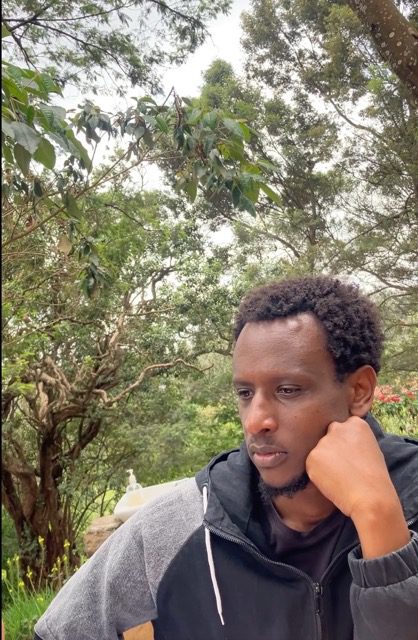
“To me, that shows that a shift is underway, even among young people, who are trying to rediscover their identity, to discover who they are and to break free from those taboos, from ideas that you are not allowed to do this because you are a Christian. People are trying to question things; they are trying to return to their roots. So, I think the identity crisis has always been there, it is just that society now, whether it is Maasai society or Kenyan society, has started to concern itself with it more.”
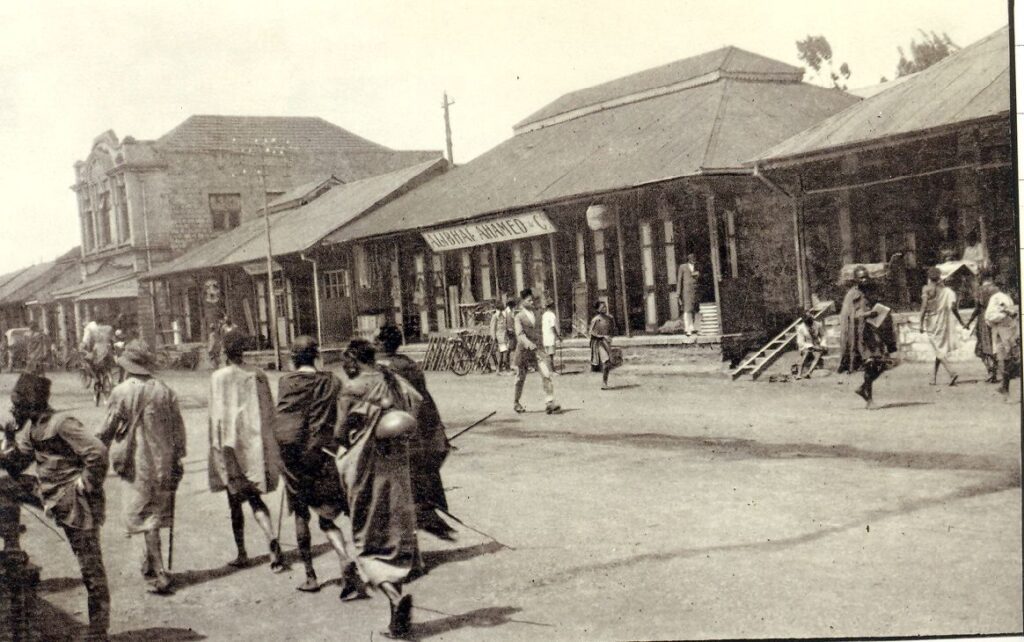
Did religion impose a certain way of life? “Religion has always been used to belittle or scorn indigenous customs and cultures, and to glorify Western culture or the culture of those in power. The first schools in Kenya during the colonial period were missionary schools. That means it was very systematic, in the sense that you could not attend school without accepting the religion. Because once you go to school, it is your first day of school and you are baptized as a Christian, then you have come to belong to that new religion. Religion was a way to prepare people for this new way of life, to change and to accept the new way of life.”
And Sompoika will keep on tearing pages out of books. “I want to continue working with text documents and use old books or documents written by missionaries during the pre-colonial and colonial periods. Because they have texts that suggest Africans were savages. I might even use cowhide, because I see a kind of sculpture there. If a cow loses her calf at a very young age, the Maasai sew the skin of the deceased calf back on to use during milking. That stimulates the cow to keep giving milk. I find it beautiful; I want to use that image for my new project.”
This article was first published on the website of the Red Hill Gallery: http://redhillartgallery.com/