

Newsflash! Kagame and Tshisekedi sign a peace deal.
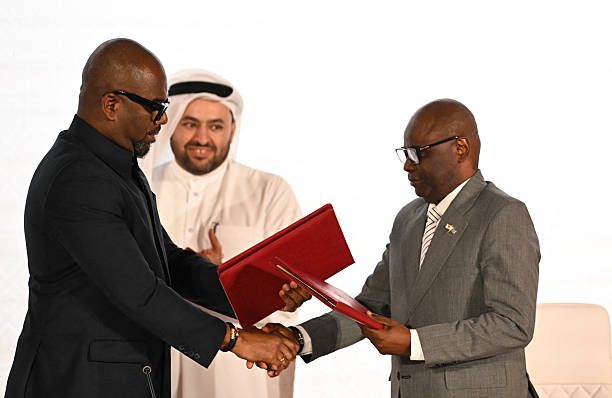
Once more a peace treaty was signed in Washington for Congo. This time Rwandan president Paul Kagame and his Congolese counterpart Etiénne Tshisekedi penned the agreement on the 4th of December. But a new agreement will not bring peace to Congo. “No one is adhering to the previously agreed-upon ceasefire, and the fighting groups don’t care about what’s agreed upon at the negotiating table,” says Stephanie Wolters of the South African Institute of International Affairs. “No progress has been made since the earlier agreement in principle in June in Washington.” Under US leadership, Congo and Rwanda have been talking in Washington for months, and the M23 militia has been talking with Congo in Doha.
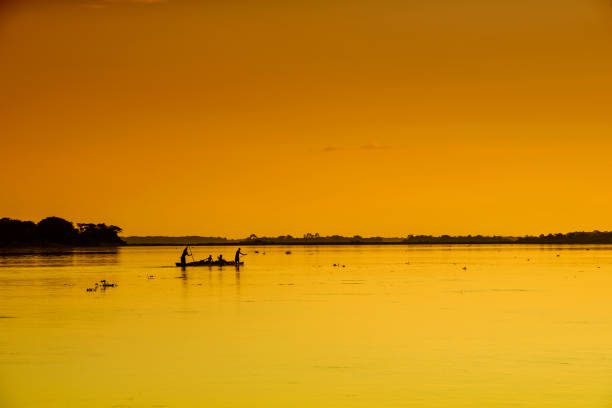
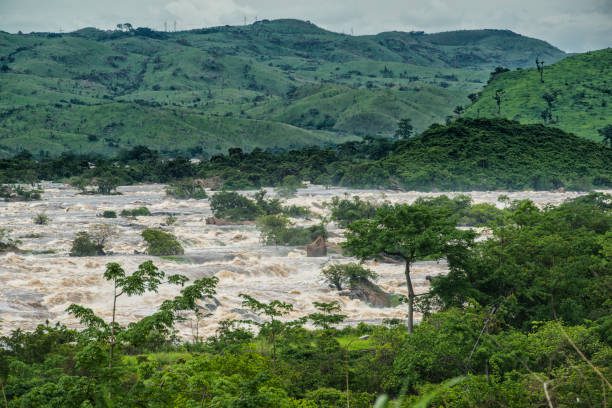
It looks like paradise around Lake Kivu in eastern Congo: volcanoes rumble on the horizon, mist hangs in the valleys, green hills descend to rivers that rush through the landscape. But behind this beauty, a jungle of treachery has lurked for thirty years. Armed groups make life unsafe, and the local population cannot trust any soldier or a politician. Amnesty International writes in a report about a woman raped by militia fighters: “If she sees someone in military uniform, she immediately gets traumatized.”
Negotiations regarding this beautiful and resource-rich region, where a brutal war is raging, resumed last month in Doha. There, the Congolese government and the M23 signed a new framework agreement under pressure from Qatar and the United States. And now there is another deal made in Washington. The central question however remains: is the M23 willing to leave eastern Congo? For now, that seems unlikely. How did the M23 gain so much influence, and what does that mean for the future of the conflict?

An unavoidable player
In the eastern region of Congo, farmers plow the land in rags, but rarely see a harvest. Millions of people are constantly fleeing armed groups that enrich themselves with natural resources.
More than a hundred militias are active in the area. They violate human rights, recruit children, and destroy the trust of the population. Among all these groups, one has significantly reshuffled the balance of power in recent years. The M23 militia, supported by neighboring Rwanda and Uganda, has become an unavoidable player in eastern Congo. Kigali, in particular, has been the M23’s main military and logistical base for years. The militia would never have captured such a large part of eastern Congo without help of Rwandan soldiers, weapons, and protection. Earlier this year, the militia also captured strategically important cities like Goma and Bukavu. Thousands of people were killed.
For many residents of eastern Congo, the capital, Kinshasa, practically on the other side of the continent, feels far away. Historically, their ties with Rwanda and Uganda are much stronger. For over a century, Hutus and Tutsis have been migrating from the overcrowded highlands of Rwanda and Burundi to eastern Congo in search of agricultural land.
History of rebellion
The beginning of the war in eastern Congo is often traced back to the 1994 genocide in neighboring Rwanda. To this day, a group of Hutus linked to that genocide remains hidden in the east of the country. This group, calling itself the FDLR (Democratic Forces for the Liberation of Rwanda), works closely with the Congolese government army, for example, to extract natural resources and fight other militias.
For Rwanda, the presence of these so-called génocidaires has been the standard motive for military interventions in Congo for years. President Paul Kagame considers the FDLR a direct threat to his country.
Every attempt at peace in the region therefore routinely includes a provision for the elimination of the FDLR and the fight against Hutu militias. In recent weeks, fierce fighting has raged again between the M23 rebels and (pro-)government forces, with multiple clashes in both North and South Kivu.
With the 1994 attempt to exterminate all Tutsis in Rwanda in mind, Tutsis in Congo have also armed themselves. The Tutsi militias have changed their names regularly over the past thirty years, although one goal has always remained the same: to serve the interests of Rwanda and the Congolese Tutsis. This time, they are called M23. “During their first rebellion, at the end of the last century, you could still say it was a broadly supported movement,” says Dino Mahtani, who worked for many years in Congo as a researcher for the UN and other organizations and is now an independent consultant. “While the military leaders were often Tutsis, the fighters also included many members of other ethnic groups.” In 1996, the mainstays of the Tutsi militias, Rwanda and Uganda, marched together on Kinshasa to oust the kleptocratic President Mobutu. But shortly thereafter, they became rivals and fought three major battles around 2000: a feud that only further fueled the war in Congo.

Agreement of March 23
After a peace accord in South Africa around the turn of the millennium, the rebellious Tutsi militias were integrated into the government army. This failed, however, and led to a second uprising, which ended in 2009 with the March 23 accord, after which the movement became known as M23 – Mouvement du 23-Mars (23 March Mouvement). In the following years, M23 gradually transformed into a movement composed almost entirely of Tutsis.
Wealthy Congolese Tutsis collaborated through a close-knit business network and, traumatized by the genocide, offered each other regional support. At the same time, however, they competed for influence. When M23 was temporarily incorporated into the national army, its leaders even ended up in a brawl at the Goma casino during a dispute over money.
After the March 23 accord of 2009, tensions persisted. M23 leaders were given high-ranking positions within the government army. “In their hunt for the FDLR, they murdered many Hutu civilians who had hidden among the fighters,” says Mahtani. “At the same time, they made a fortune by taking over the FDLR’s most lucrative mining sites.” Then-President Joseph Kabila eventually tried to put an end to these practices. He transferred the M23 leaders to other regions, far from the mines. But this led to desertions and another uprising, which culminated in the capture of the regional capital, Goma, by M23 in 2012.


Regional Rivalry
This was short-lived. Under heavy international pressure, the rebels withdrew after a few days. Some of the M23 fighters found refuge in neighboring Uganda, while others fled to Rwanda. Nevertheless, the movement resurfaced a few years later. At the end of 2016, M23 was revived financially and militarily, first by Rwanda and later by Uganda. “We share culture and language with Rwanda,” Colonel Vianney Kazarama, the military spokesperson for M23, told me in 2012. “But no one in M23 has Rwandan nationality.” Most Congolese have long since stopped believing that propaganda.
The rivalry between Rwanda and Uganda gained new momentum with the arrival of Congolese President Félix Tshisekedi in 2019. Uganda managed to build a good relationship with him and received permission to build roads in Congo: lucrative projects that ended up in the hands of companies owned by high-ranking Ugandan military officials. This was unacceptable to Rwanda. “The Rwandans didn’t tolerate such a prominent role from the Ugandans,” says Mahtani. “They felt Uganda was invading their geopolitical space. That’s why they took control of M23.”
The situation became even more complex when Kenya also joined the battle for influence. “As East Africa’s strongest economy, Kenya had welcomed Congo into the East African Community,” says Mahtani. “Kenyan companies were ready to make a fortune there.”
The M23 remains closely linked to Rwanda. According to the UN, Kigali not only supplied drones and anti-aircraft guns but also sent some 5,000 soldiers to ensure the offensive early this year was a success. A UN report indicates that the M23 has begun establishing its own administrative structures and a self-trained police force in recent months. “They have laid the foundations for their own state,” says one analyst.
‘Uncertain Way Forward’
The euphoria over an impending peace deal did not last long. After the handshakes and flashing cameras, it became clear how difficult it was for both Congo and Rwanda to make concessions. The M23 showed no willingness to leave the territory it captured earlier this year. On the contrary, in addition to its own administrative structure, the movement recruited new fighters. At the same time, progress stalled on the two most sensitive points of the agreements: Rwandan soldiers did not withdraw, and the Congolese army did not eliminate the anti-Rwandan FDLR.
The treaty signed in the White House in June looks more like a business deal than a peace pact. “Everything in Congo revolves around money,” says Dino Mahtani. “The result is an agreement with an uncertain path forward. It could lead to more fighting.”
According to the UN report, the M23’s capture of the Rubaya mining area in April of last year represented a significant strategic advantage. According to Reuters the militia makes half a million dollars per month out of the mine. Maintaining control over such an area requires strict control: warlords maintain surveillance, collect tolls at entry and exit points, manage mineral trading centers, and levy taxes on export routes to neighboring countries. This has created a war economy in which the mud-stained miners earn next to nothing. “It will be a particularly bitter pill for the M23 to abandon those mines and their administrative structures and withdraw north of Goma, as stipulated in the agreement,” says one analyst.
Thus, a country with the most beautiful nature, the most fertile agricultural lands, a country known as the world’s Eldorado of natural resources, could also be nicknamed the “rape capital” and fall prey to militias whose cruelty knows no bounds. Atrocities committed to punish, intimidate, and humiliate civilians so they can maintain their power and continue their plunder. And peace will only disturb this looting machine.