

By Peter Kidi in Kakuma
There is a tension between humanitarian narratives and lived realities. In policy documents and donor reports, phrases like “changing lives”, “market access”, and “mentorship opportunities” are presented as evidence of progress. Yet for many of us, these narratives exist in sharp contrast to the hunger, protests, and police violence that define daily life.
He carries a notebook,
not for business plans
but for testimonies.
Ink stains his fingers
like wounds that never close.
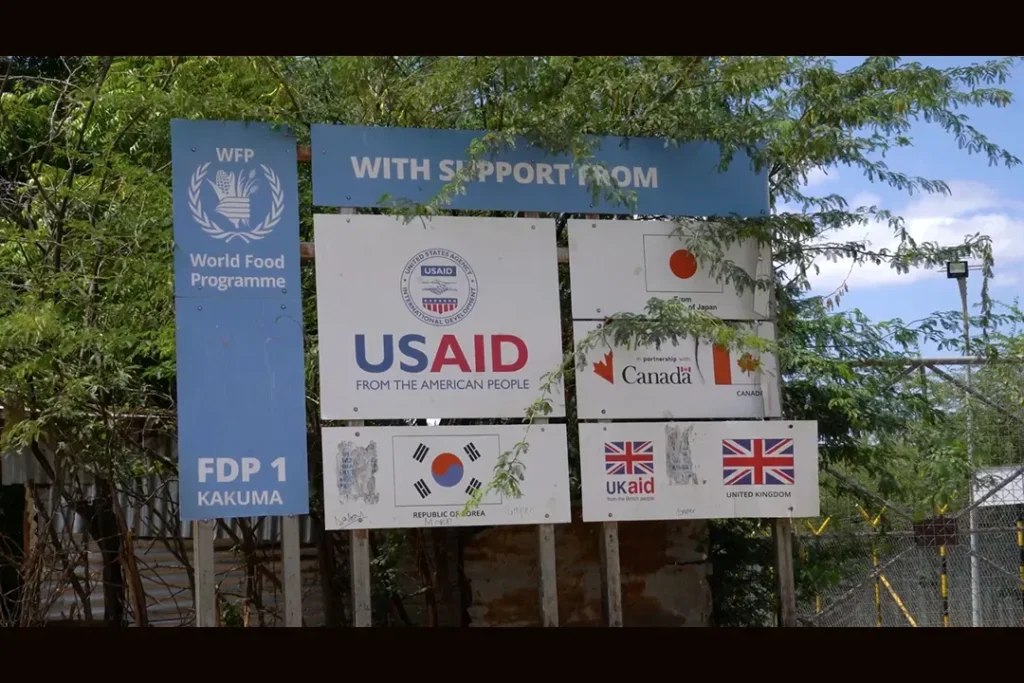
In the morning, he films banners
“Mentorship, Grants, Market Access!“
bright words stretched like shade
over an empty stomach.
In the afternoon, he films streets,
stones in children’s hands,
mothers running from tear gas,
police boots pressing down
on hunger’s throat.
They say changing lives.
He writes: changing stories.
For every glossy report,
there is a family boiling leaves for supper.
For every donor handshake,
a child collapses in a queue for water.
He interviews hope,
but hope speaks in whispers now,
afraid of being beaten.
He interviews truth,
but truth’s voice cracks
too hungry to finish sentences.
At night, when he plays back the footage,
he sees two worlds colliding:
He carries a notebook,
not for business plans
but for testimonies.
Ink stains his fingers
like wounds that never close.
In the morning, he films banners
“Mentorship, Grants, Market Access!”
bright words stretched like shade
over an empty stomach.
In the afternoon, he films streets,
stones in children’s hands,
mothers running from tear gas,
police boots pressing down
on hunger’s throat.
They say changing lives.
He writes: changing stories.
For every glossy report,
there is a family boiling leaves for supper.
For every donor handshake,
a child collapses in a queue for water.
He interviews hope,
but hope speaks in whispers now,
afraid of being beaten.
He interviews truth,
but truth’s voice cracks
too hungry to finish sentences.
At night, when he plays back the footage,
he sees two worlds colliding:
the slogans of tomorrow
against the bones of today.
And his pen trembles with the question
no programme can answer:
Whose lives are really changing
ours,
or the narrative written
to make our hunger
look like progress?
This poem was first published by the New Humanitarian