

On a farmyard along a road somewhere in Somaliland, the national flag and that of Israel fly side by side. That is remarkable in an Islamic country. Ayan Mahamoud stops the car; she wants to meet the owner of the flag. In 1991, Somaliland decided to secede; Israel was the first to recognize the new country late last year, and that caused quite a stir.
In the shade of the mango and papaya trees, farmer Omar Cali Hussein recounts how, after the Israeli decision, he embarked on a long and expensive journey to buy a flagpole and banner – and how angry neighbors ordered him to take the flag down immediately. Former diplomat Ayan Mahamoud, who represented Somaliland in the United Kingdom until a few years ago, nods understandingly. “I received many angry emails from my Palestinian friends in London with whom I demonstrated against the genocide in Gaza,” says Mahamoud. “But we Somalilanders have lived in a house with the doors locked for years. So, when someone offers to pull you out of your isolation, you don’t ask about their identity.”
Omar Cali Hussein talks about Somaliland’s bloody past. The massacres. The almost total destruction of the capital, Hargeisa. The execution of his father in 1988 by government soldiers. “I wasn’t even able to bury him,” says the farmer. Ayan Mahamoud adds to this, telling how a taxi driver was shot dead by a firing squad at the market back then: “No one understood why this innocent man had to die.” Somaliland is a country full of trauma, where recent history created an exceptional context. The emotional urge to sever all ties with Somalia, the Somalilanders’ pursuit of independence, finds its origins in the massacres of that time.

The Tears of Jan Pronk
Six young men walk along the deserted highway. Scantily dressed in trousers and T-shirts, without luggage. Impoverished Ethiopians looking for work in the region. In this bleak environment, they seem lost, but Ayan Mahamoud focusses on their stoicism instead. In Africa, no one gets stressed about migrants, and certainly not in this part of the continent, where migration across the Red Sea has been the norm for centuries. “Somalis never put a single obstacle in migrants’ way; we always provide travelers with drinking water and shelter,” says Mahamoud.
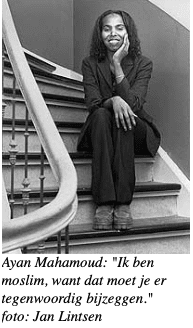
Besides being a former diplomat, Ayan Mahamoud (50) is a human rights and refugee activist and is dedicated to promoting her country’s culture. She is also a Dutch Somali. She arrived in the Netherlands as a minor in the eighties. At the end of the last century, she led debates on integration there and dueled with politicians and judges. She became a successful immigrant with many degrees, until she had outgrown the Netherlands and moved to the United Kingdom, where she rose to the rank of diplomat.

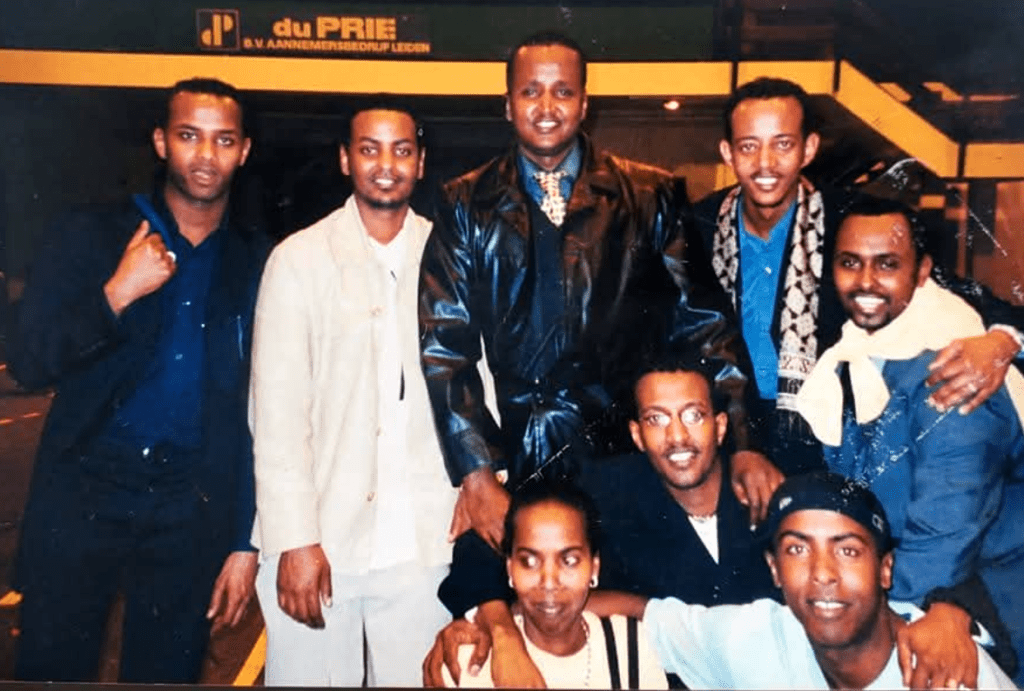
Celebrating 10 years of independance of Somaliland in 2001
When she arrives in the Netherlands in 1989 as one of the first refugees from Somalia, obtaining refugee status proves difficult. Few know the country in East Africa. That changes when the Dutch Minister for Development Cooperation, Jan Pronk, visits war-torn Somalia. “He cried on television in 1992 and said he had never seen anything so terrible. Shortly thereafter, all Somalis who had already been in the Netherlands for three years were granted residence status. Thanks to the tears of Pronk.”
Mahamoud goes to live in Nijmegen. “The Netherlands was still largely milk-white,” she recalls. “Dutch people were curious about your dark skin and wanted to touch you. They were sociable and invited you into their living rooms. I never felt discriminated against.”
She starts working as a social worker during her second year of study. “Young migrants are full of energy, but non-legalized refugees got stuck in a reception center and were not allowed to go to school or work. Work is also about ethics. It is about learning, learning to integrate and develop a self-image. So, what are the dangers? Sex, drugs, rock and roll, crime. Everything. Many of the young people I grew up with became addicted to drugs. You become self-destructive if you don’t know where you belong.”
In 2001, she tells the Nijmegen City Newspaper: “The voice of immigrants is not really heard by policymakers. The louder you scream and the longer you persist, the greater the chance that you will be heard.” Her first job with the NGO Vluchtelingenwerk does sit well with that activism.
Over time, she sees the soul of the Netherlands shifting. “Not because there were too many refugees, but because no system was in place; the authorities did not know what to do with them. Refugees did not leave the overcrowded centers. Politicians feared public opinion and began exerting pressure to deport rejected asylum seekers.”
In the late 1990s, the Netherlands begins sending Somali refugees back. Four rejected Somalis are forcibly deported and transferred to Garbahare in the south, designated as a safe place. The second flight degenerates into a shootout at the runway in Somalia, forcing the accompanying Dutch officials to flee in a panic.
At that time, Somalia was divided into numerous mini states administered by warlords. According to the Dutch authorities, some places were indeed safe for return. They negotiated about this with one of those warlords, General Morgan, son-in-law of former Somali President Siad Barre. In 1988, Morgan had carried out his father-in-law’s order to destroy the Isaaq clan in the northern city of Hargeisa. Estimated death toll: 200,000. He is also known as the Butcher of Hargeisa.
Mahamoud: “Oh, how happy Morgan was to receive some refugees from the Netherlands. The Dutch officials said they had visited him and consulted with him under a tree. With a notorious war criminal!” Thanks in part to Ayan Mahamoud’s activism, a judge prohibited the return of any more Somalis.

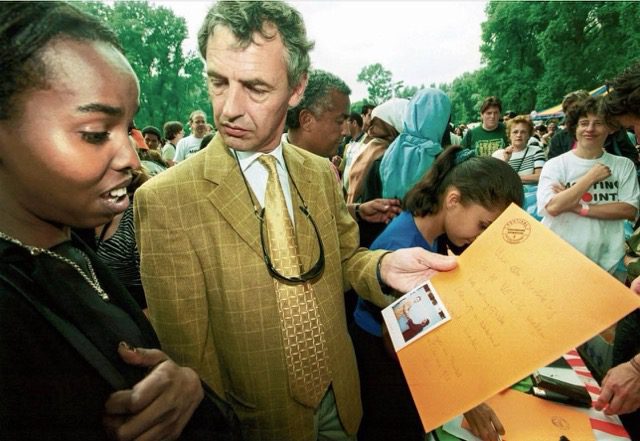
2001 With Dutch minister in Leiden in the Netherlands
At a meeting with State Secretary for Justice, Elizabeth Schmitz, she angrily walks out after ten minutes. “My door is always open for you,” the State Secretary says, but Mahamoud snarls: “I am never coming back here.” When a group of Somali elders does accept such an official invitation to discuss deportations at a sandwich buffet, she waits for them in the hall of The Hague Central Station. The still-young Mahamoud stands right in front of the traditionally respected gentlemen with henna-red beards. “Don’t go, the official will frame you; once you start eating sandwiches, you’re sold,” she warns. The bewildered gentlemen slunk away.
Always that clan

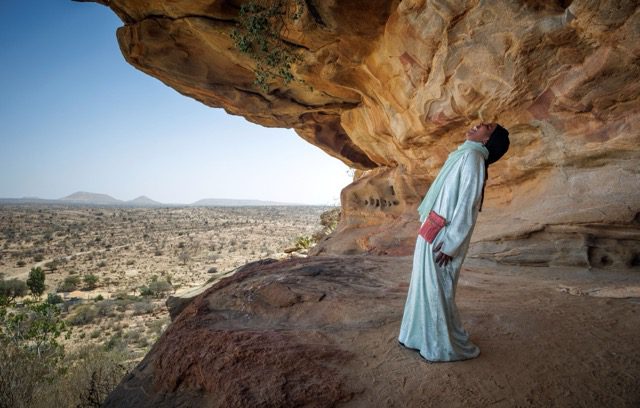
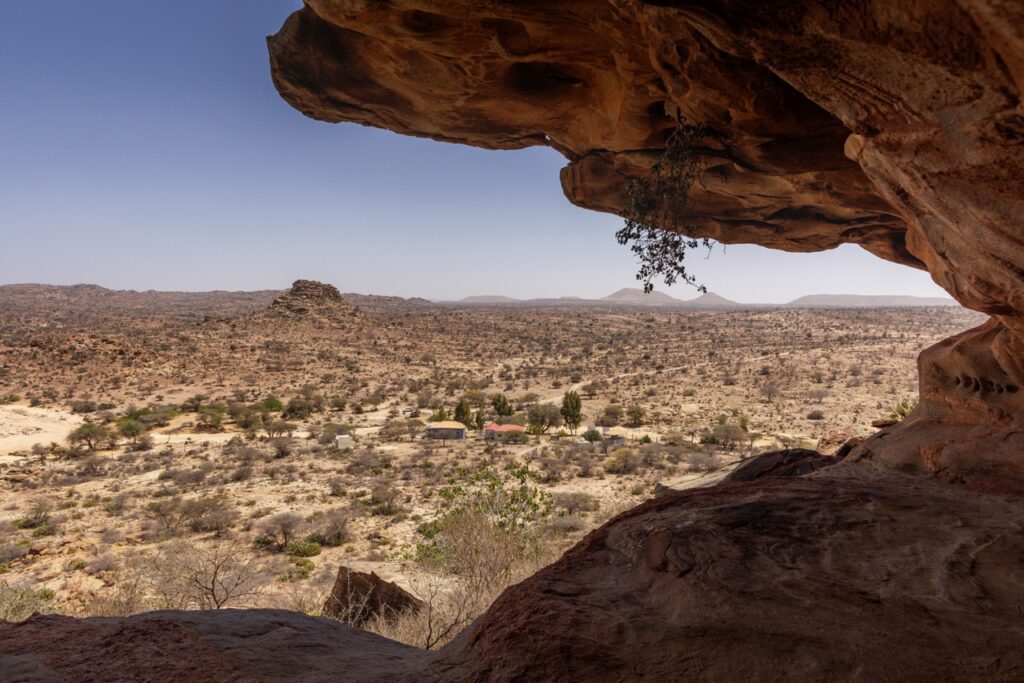
Somaliland has a rich cultural history, and at the end of the country road where a riverbed splits itself into two, stands Laas Geel. This is a mountain with seven-thousand-year-old rock paintings. The terrain around the caves is clumsily enclosed by barbed wire that even a camel can walk through. There is a lack of protection for these archaeological treasures, which, like Somaliland’s culture as a whole, were neglected after the civil war in 1988. Mahamoud is dedicated to rebuilding that cultural sector, such as at the annual book festival when she takes writers to this magical place.
The local inhabitants have known the drawings for centuries and attributed mysterious spiritual powers to them. However, surrounded by images of elephants, giraffes, decorated cows, and sheep, a slow-witted guide fails to answer the question of what kind of people lived here in prehistoric times. “No idea, I don’t even know their clan,” he says, pointing with his stick at an image of a cow with large udders. Mahamoud bursts out laughing: the clan, always that stifling clan ties of the Somalis. It almost became her downfall.

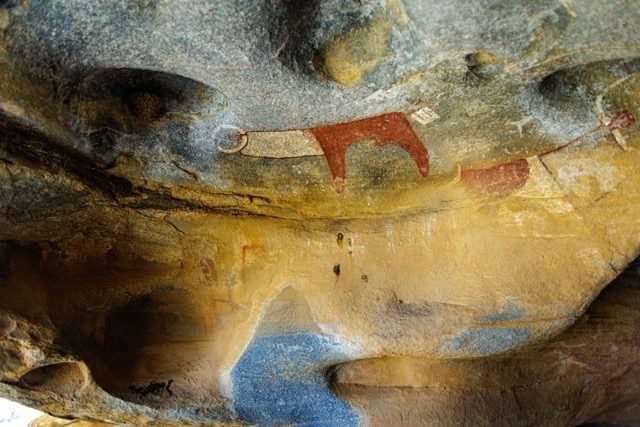
photo: Petterik Wiggers/Panos Pictures
“In Somalia, I learned at a young age that I belonged to the wrong clan,” Mahamoud says. “I overheard stories about a relative of my Isaaq clan in prison, about another one who had been hanged. I slept in the same bed as my grandmother, and at night she stuffed a cloth into her mouth so that I couldn’t hear her crying. Every descendant of the Isaaq clan from Somaliland was required to leave the country. That is how I ended up in the Netherlands.”
After ‘9/11’, following the Al-Qaeda attacks in the United States in 2001, she sees toxic discussions and xenophobia emerging in the Netherlands. “Not only right-wing radical politicians but also Muslims took a stand against Islam and refugees.” According to her, politician and fellow countrywoman Ayaan Hirsi Ali makes it worse. “She played along with these right-wing sentiments, with this populist, anti-Muslim sentiment. Ayaan Hirsi Ali contributed to the cynical tone of the debate, to the polarization.”
Mahamoud leaves the Netherlands; she is done with it. “You had to apologize for what others were doing elsewhere. One day, after September 11, I thought: I am not here to apologize for what is happening all over the world. I was frustrated, but I think it was also disappointment, because I love the Netherlands, I felt welcome. The country that became my home turned out not to be a home anymore after all.”
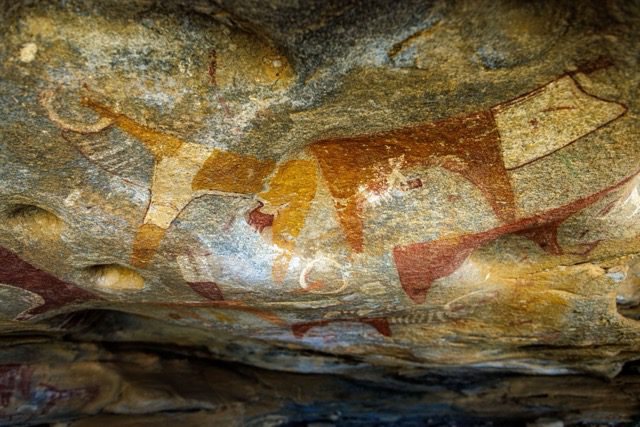
photo: Petterik Wiggers/Panos Pictures
She moved to London. “I wanted to do something positive, inspire people, and found work at a cultural center in London. In the cultural sector, I can tackle all the issues close to my heart, such as integration. You can investigate problems and inspire young people.” In 2009, she founded the Kayd Somali Art and Culture Center, which focuses on Somali artists and supports writers and poets. “I want to give immigrants the idea that they are part of a larger society, so that they do not feel isolated. I think we need to promote that among immigrants.”

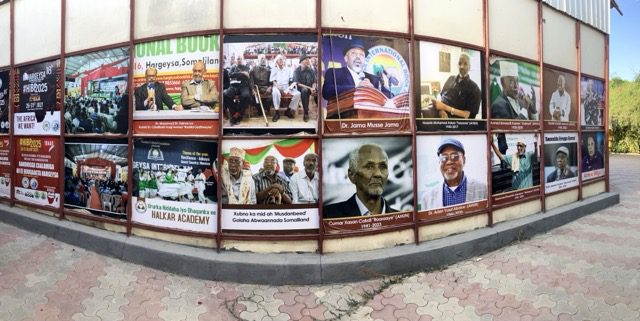
The Cultural Centre in Hargeisa photo: Petterik Wiggers/Panos Pictures
Africa’s Largest Book Festival
In 2009, Mahamoud also becomes a co-organizer of the annual book festival in Hargeisa, one of the largest on the continent. There, she encounters a different kind of conservative resistance than in the Netherlands. The festival aims to promote an open society, while some imams prefer to keep liberal ideas at bay. A fatwa looms. Mahamoud enters into negotiations with them, following the old nomadic consultation structure. “In conflicts in Somaliland, you first have to listen for a very long time, respect the dignity of those involved, and only then do you start negotiating. And once a decision is reached, no one comes back on it, and it is not used against anyone. Then we move forward together, without resentment.”

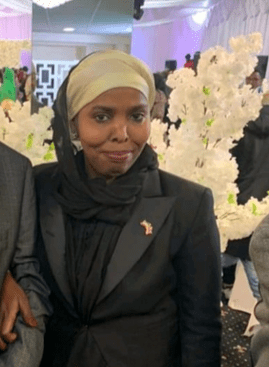
One day, the government in Hargeisa asks her to represent Somaliland in the United Kingdom. At first, she wants to refuse, but ultimately, she does not: “We always complain about the lack of participation of women, always about this and that. Let me make a contribution for once. This is your chance. Don’t be a coward, I said to myself.”
Diplomatic life, full of labels, takes some time to get used to. Now she cannot simply walk out of a meeting with a minister anymore. At the same time, due to the lack of international recognition of Somaliland, her job bears a strong resemblance to the activism she is already familiar with: harassing politicians and civil servants, delivering petitions, helping with fundraising for the first hospitals back home. “I operated on a very different level, but it remains activism.” A major success of her diplomatic work was the acceptance in the UK of Somaliland’s passport as a valid travel document.

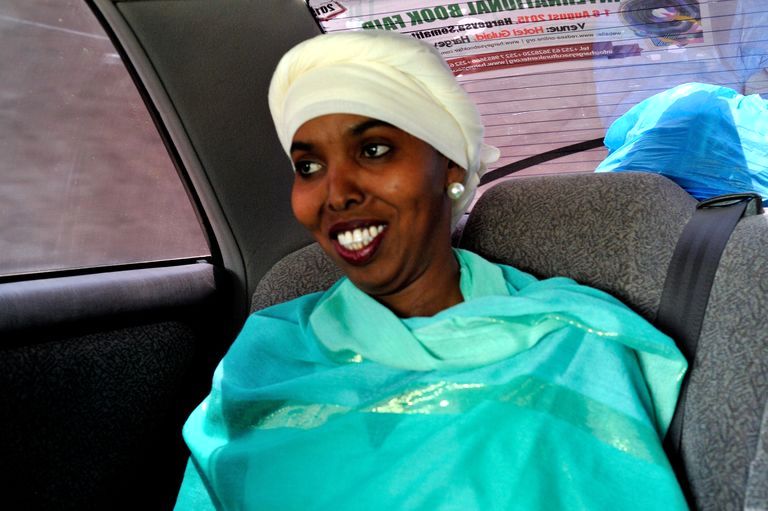
The excursion to the rock paintings is over. As the rustic savannah of Somaliland glides by, Ayan Mahamoud’s mind is racing. She is mulling over her royal honor following recent revelations about the pedophile Epstein. “I was sworn in by Queen Elizabeth as a Member of the British Empire. What if it turns out that she secretly knew about her son Andrew’s sexual escapades? Then I will return the certificate.” It is Mahamoud through and through: the eternal activist, always driven by anger over injustice.
Once back in Hargeisa, Mahamoud parks the car—in the wrong spot, as it turns out. A police officer emerges from the traffic chaos to fine her. “Oh, sorry Madam Ambassador,” he apologizes after she rolls down the window. At the ministries, around the president, but also among fishwives and market girls: Ayan Mahamoud is a celebrity in Somaliland.
In a fish market built specifically for women through her efforts, the vendors cheer as she enters, stately in her long robe. And once again, the question arises as to how this woman, forged in Western liberal values, can be so influential in a culturally conservative society. “Because I have never been impressed by power, regardless of whether you are President of Somaliland, a Member of Parliament, or a Minister in the United Kingdom or the Netherlands. It is about what you can achieve, bringing about change that has a positive impact on the lives of others.”
This article was first published in the Dutch daily newspaper NRC on 15-4-2026