


By Sara Creta and Nour Khalil
Deportations of Sudanese refugees escaping the world’s largest humanitarian crisis for safety in neighbouring Egypt have accelerated over the past 12 months, escalating a campaign of repression that was exposed in a joint investigation by The New Humanitarian and the Refugees Platform in Egypt last year.
Critics say the UN’s refugee agency (UNHCR) – the main international organisation in Egypt mandated to protect and advocate for refugees – has failed to mount a sustained challenge to the crackdown, arguing that it prioritises preserving relations with the government over defending refugee rights.
“[Security forces] threatened me, my wife, even my family by phone and in the street,” said Osman Yaqoub Mansur, who left Darfur for Egypt more than a decade ago and later founded the African Vision School for Sudanese Education, a grassroots initiative in Cairo that gave classes to Sudanese children and adults, including refugees.
Mansur said authorities raided his premises last summer, and detained him on false accusations that he had taught students that land disputed between Sudan and Egypt belonged to Sudan. He said he contacted UNHCR but was told simply to “keep moving” as threats forced him to shift from place to place across the capital.
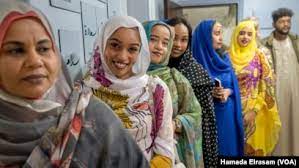
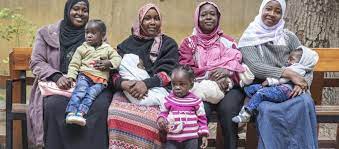
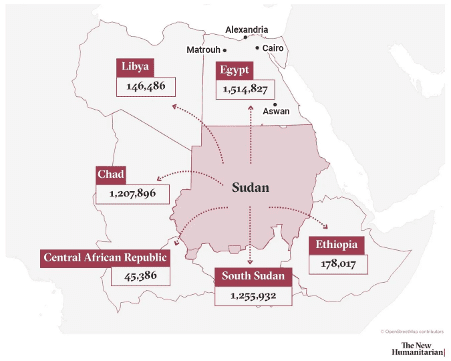
Some 1.5 million Sudanese have crossed into Egypt since the outbreak of the more than two-and-a-half-year war between the national army and the paramilitary Rapid Support Forces. But the refugees, among 11.5 million displaced by the still-escalating conflict, have faced scapegoating from politicians amid a deepening economic crisis.
Last year’s investigation revealed that large-scale illegal deportations of thousands of Sudanese were secretly being carried out in violation of international refugee conventions that Egypt had long ratified. The investigation exposed the locations of the squalid facilities where security services were detaining people.
Follow-up reporting – based on newly obtained material from local refugee organisations, leaked Egyptian government documents, and testimonies from dozens of refugees and lawyers gathered over more than a year – reveals a further escalation in the deportation campaign.
Far more refugees are now being detained and deported, with security services carrying out sweeps and stops not only in border areas where people enter the country but deep inside major cities. Authorities have also targeted refugee-led initiatives, including by shutting down dozens of Sudanese-run schools.
The crackdown comes as the EU has pledged large sums to Egypt in exchange for it curbing migration to Europe – a deal mirroring similar agreements with other transit countries, and which risks making the bloc complicit in abuses by the Egyptian government, which did not respond to a request for comment.
UNHCR receives substantial funding from European governments, which critics say creates political pressure on the agency to avoid publicly criticising Egypt’s deportations and other policies that increase refugees’ vulnerability and limit the UN’s ability to support them.
Other sources accused UNHCR of being directly compromised by Egyptian security services. They said the agency’s operations were subject to pressure that led some staff members to bury refugee complaints or prevent reports of arrests and deportations from being escalated.
UNHCR spokesperson Babar Baloch said donors are critical to sustaining the agency’s activities, but its work “is guided by the fundamental principles of humanity, impartiality, neutrality, and independence”. He said the agency “regularly engages” with Egyptian authorities to raise concerns on violations affecting refugees.
“Given the ongoing brutal conflict in Sudan, UNHCR believes that people forced to flee Sudan are likely to be in need of international protection and, as such, should not be forcibly returned to their country,” Baloch said.

A “record number” of deportations
Even before the current war and displacement crisis, Sudanese and other refugee groups in Egypt faced deportations and other abuses by security services, including arrests and, in some cases, killings.
However, deportations began surging in late 2023, ahead of the Egypt-EU agreement and amid increased Sudanese arrivals. The trend then accelerated further after the adoption last year of Egypt’s first national asylum law. Though not yet fully implemented, sources said it emboldened authorities by granting them wide latitude to revoke refugee protections on vague grounds such as respect for undefined Egyptian values.
Accurate numbers of deportations are difficult to determine as the government does not give the UN and other humanitarian actors access to detention centres and border areas, and because it does not share any of its own data. Still, snapshots from local organisations supporting refugees hint at the scale of the crackdown.
In the first three months of this year, one prominent local refugee advocacy organisation reported a “record number” of deportations in an internal research document shared with reporters. Like many sources in this story, the group’s director requested anonymity – for both themselves and the organisation – due to the risk of government reprisals.
In total, the organisation documented over 850 deportations of mostly Sudanese refugees – already over half the 1,546 it recorded in all of 2024, a number that itself represents a fraction of the more than 20,000 Sudanese refugees likely deported last year.
The case archive of the Refugees Platform in Egypt, which includes incidents reported to it by refugees and lawyers, documented the detention of 687 Sudanese asylum seekers between April and August in three main areas – Greater Cairo, Alexandria, and Matrouh – and a further 1,560 who were detained and deported since August.
Reporters also gathered visual evidence of arrests and deportations. One geolocated and verified video shows a uniformed officer with a stick confronting refugees outside a UNHCR building in Cairo. Others show security forces carrying out arrests at police checkpoints and in residential areas.
Two Egyptian security officials described how deportations have become routine. One officer from Greater Cairo said his police station deports around 200 people weekly, while another said over 2,000 Sudanese are transferred weekly from police stations in Cairo to Aswan, a town near the Sudan border.
One Egyptian human rights activist described the scale of deportations as “unprecedented” in Egypt’s recent history, while a senior official at an international NGO said refugee protection is “shrinking by the day”, trapping families between impossible choices: “Endure detention and deportation, or risk their lives trying to reach Europe.”

Legal protections erased
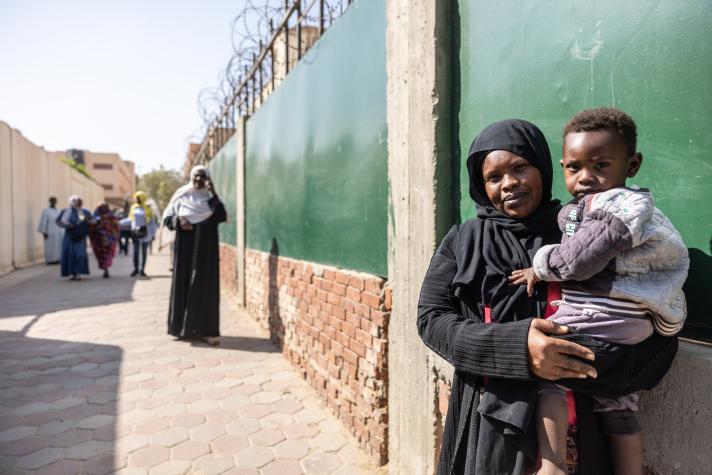
Most refugees who spoke to reporters said they were detained and deported for lacking a valid residency permit – a legal requirement that applies to all foreign nationals but which is difficult to meet for refugees because the government has massive registration backlogs, with some appointments pushed to 2029.
Refugees said they were also arrested and deported despite having UNHCR documents, which should protect them against refoulement. Some even described instances in which Egyptian authorities confiscated their cards at the time of arrest, thereby stripping them of proof of their protected status.
One government document obtained by reporters ordered the deportation of six mostly Sudanese refugees, four of whom were registered with UNHCR. The document instructed authorities to confiscate the UNHCR cards and ensure the refugees signed declarations affirming their “voluntary” departure.
While the confiscation of UNHCR cards and coerced “voluntary returns” have long been flagged by human rights groups in Egypt, the fact that it is recorded here in an official government document may indicate that these are not isolated abuses but part of a broader strategy.
“It is a systematic effort to erase their legal protections,” said a lawyer for a local refugee organisation who has worked on deportation cases in Egypt for over a decade. “Once the documents are taken, it becomes almost impossible for them to defend their right to stay.”
The director of the local refugee advocacy organisation said the situation has deteriorated because of the “blank check” the EU has provided to Cairo to curb irregular migration. They said the partnership has “given the Egyptian authorities complete freedom to violate their international obligations”.
The agreement may also have proved counterproductive, as the worsening environment for refugees has driven onward movement of Sudanese to Libya. While some remain there, reports suggest the number travelling to Europe jumped significantly in the first months of 2025.
During this period, hundreds of Sudanese attempting to reach Libya were also arrested, with detainees and their lawyers describing to reporters severe overcrowding; being held for months without due process, healthcare, and access to asylum; and ultimately being deported to Sudan.
One internal document from Egypt’s ministry of interior showed that nearly 200 Sudanese, including women and children, were deported from Matrouh, a northern town near Libya, in a single day in September. Lawyers confirmed that such deportations occur regularly and likely involve far higher numbers.
Community leaders and children targeted
Last year’s investigation focused on refugees detained along the border after entering Egypt irregularly – necessary because visas take months to obtain – and while travelling onwards to Cairo. The latest cases show how the crackdown has spread into cities, with arrests at police checkpoints, metro stations, and in residential areas.
One Sudanese refugee said she was arrested in Cairo in January after police took her UNHCR document, leaving her without proof of status. Lacking residency papers, she said she was taken to a detention centre, where officers falsified her file to claim she had been caught near the border with no documents at all.
In January, authorities also deported a 17-year-old Sudanese boy who had registered with UNHCR and was living in Giza, according to a case shared by the refugee advocacy organisation. He was arrested on his way home from school for lacking a residency permit. His deportation five days later separated him from his parents.
In another recent incident, also shared by the refugee advocacy organisation, a 15-year-old Sudanese boy, who had lived in Egypt since infancy, was detained and deported after being arrested with a group of students who were celebrating their school graduation in a Cairo park. Despite at least two of them being Sudanese nationals, all were deported to South Sudan.
Sudanese refugee institutions have also been targeted. According to research from the refugee advocacy organisation, Egyptian authorities ordered at least 46 Sudanese community schools to close last year, oftentimes confiscating furniture, books, and other resources. Closures have continued this year, according to local media reports.
Refugee community leaders from Sudan and elsewhere – none of whom can be named due to the risk of reprisals – told reporters they are increasingly being targeted by security services, and pressured to inform on fellow refugees under the threat of detention or deportation.
“We were arrested without any legal process and threatened with deportation if we refused to report on our communities,” said one leader who was detained in January in the Greater Cairo area. “We had no choice: Either betray our communities or face violations.”
Four other refugee leaders said they were recently summoned by national security officers – in some cases by the same individual – to report on developments within their communities, such as activist activities, initiatives, and planned gatherings.
The community leaders said they also get questioned following the publication of human rights reports or media articles about refugee issues – particularly if there was suspicion they had contributed to or been in contact with the journalist or organisation involved.
“Sometimes they summon me to the office or the police station,” said one Sudanese community leader. “Other times, they demand that I write a report about a specific incident. If I don’t respond to their calls, they send threatening messages to my phone.”
One phone call was shared by a community leader with reporters. In it, a national security officer questioned the leader about a recent community initiative – asking who was running it, whether it received donations, and what services were provided to the community.

Weak data and accusations of bribery
UNHCR has faced criticism from refugees, lawyers, and civil society groups over its response to the deportations, though many acknowledged that it operates under significant constraints.
Egyptian authorities, for example, deny it access to detention centres and border areas, which make it “effectively blind”, according to a former UNHCR Egypt staff member. “They don’t know who’s being detained or deported until after it happens,” they said. “Their capacity to intervene is almost non-existent.”
The director of the refugee advocacy organisation described UNHCR’s data on forced returns as “very weak”. In an interview earlier this year, they said information gathered by the agency indicated deportations were declining – which was the opposite of what many others had documented.
UNHCR’s limited presence along Egypt’s border with Sudan means it has no system for registering refugees on arrival, leaving many vulnerable to detention as they travel to the agency’s sole registration office in Cairo. Reporters documented numerous cases of refugees being arrested en route.
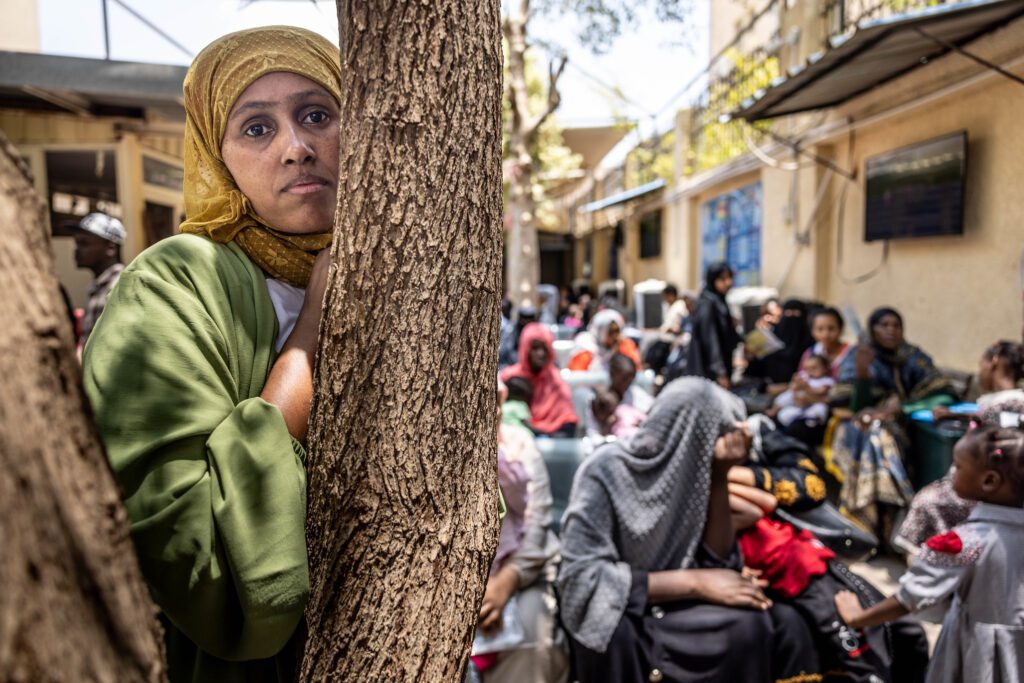
Overwhelmed by demand, the Cairo registration centre has struggled to keep up with the needs of new arrivals, especially as two other centres have recently closed due to funding cuts. Some applicants in 2024 and 2025 were given appointments as far off as 2026, according to two appointment splits shared with reporters.
The former UNHCR Egypt staff member, who worked in various positions, described growing internal frustration. “Refugees would come to me desperate for answers, and I had nothing to offer,” they said. “It got to a point where I started to feel like they resented me. I asked myself, why am I even here?”
Several sources said registration delays have fuelled a black market: Refugees with money pay a network of middlemen with alleged connections to staff working for UNHCR to take earlier appointments bought off other asylum seekers.
One refugee community leader said bribery outside the UNHCR office “happens daily and in plain sight of the police”. They accused UNHCR of inaction, beyond issuing “general caution statements” advising refugees not to pay for slots.
Baloch, the UNHCR spokesperson, said protecting refugees from exploitation and ensuring the integrity of the agency’s programmes are “key priorities”. He said UNHCR works with partners and communities “continuously” to raise awareness of fraud risks and remind refugees that all UNHCR services are free of charge.
Baloch added that funding for UNHCR operations in Egypt declined sharply this year, but that the agency has been “working hard to scale up its registration capacity and to introduce online solutions”. He said the waiting period for registration has been reduced from nine to ten months in 2024 to four to five in 2025.

A “toothless” response from UNHCR
Many other sources said that, even accounting for the constraints it faces, UNHCR’s delivery of its core protection duties — such as intervening with authorities on behalf of threatened refugees and providing timely legal support — has not been good enough.
“Even when refugees are detained or deported, the system remains opaque, the protection mechanisms are toothless, and those most at risk – like Sudanese – are left without support,” said another long-time refugee lawyer.
An Eritrean community leader, who has lived in Egypt for more than 10 years, said they typically receive “no response” when they pass on arrest and deportation reports from community members. “The community gets angry at us and holds us responsible,” the individual said. “UNHCR has put us in a very difficult position.”
Hassan Abdullah, also a Sudanese refugee, said he emailed UNHCR after receiving death threats from an Egyptian man following a dispute over money a few years ago. Forty days later, his 12-year-old son was killed in what he said was a direct escalation of the same dispute. Hassan said the legal aid he received from UNHCR was ineffective and that no protective measures such as relocation support were offered until well after the incident.
Mansur, who ran the Sudanese community school, said that after being arrested on 1 July, his family emailed UNHCR. He said the agency replied on 9 July, acknowledging receipt and noting its team was aware of the case. A more substantive response came on 29 July, by which time he had already been processed for deportation, without seeing a lawyer. His deportation document – obtained as part of this investigation but normally kept secret – instructed Sudanese authorities to facilitate emergency travel documents for his expulsion.
Mansur also alleged that members of his family repeatedly contacted a specific UNHCR staff member, who assured them the case would be handled. But when they later followed up internally, they were told there was no record of any of these messages. “He just says, ‘I’ll handle the problem,’ and doesn’t record anything officially,” Mansur said.
A well-placed current UNHCR Egypt staff member alleged that security services have infiltrated the agency and that this influence results in cases being left unaddressed. They said some colleagues, acting under pressure, have urged others to drop reports of arrests or blocked sensitive complaints about government abuse from being escalated internally.
The whistleblower said the same staff members have also monitored refugee community leaders, flagging those who raise complaints or organise around refugee issues. They said some of these individuals have later been detained for alleged visa violations or security concerns.
Other refugees, lawyers, and human rights activists also described fears that UNHCR’s operations have been infiltrated by security services – a problem that sources said affects many international organisations in Egypt – citing cases where refugees were arrested shortly after visiting UNHCR offices.
One refugee activist said he attended a UNHCR-organised meeting in Cairo in 2021, and the next day received a call from an intelligence officer, who frequently contacted him, requesting a meeting at a security headquarters.
“I was shocked to discover that he knew everything we had discussed, as if he had been present among us,” the community leader said. “This exposed me to threats from him because my intervention during this meeting was sharp against the Egyptian government.”
Reporters asked UNHCR to respond to accusations that its Egypt office is being influenced by security services, and to the allegations that some staff buried reports of arrests, but the spokesperson did not address these points directly.
“When UNHCR receives information about the possible arrest, detention, or deportation of people who may be in need of international protection, it follows up with the Egyptian authorities and advocates for due process in line with international refugee and human rights law,” Baloch said.
Staying silent
Many sources accused UNHCR Egypt of not publicly criticising the deportations and standing up to the Egyptian government, with some arguing that its silence amounts to a form of collusion.
“The system is becoming more organised and aggressive,” said the lawyer who has worked on deportation cases for over a decade. “By staying silent on clear violations of asylum law, UNHCR isn’t just neglecting its mandate – it’s becoming complicit.”
An analysis by reporters of UNHCR Egypt’s public communications over the past two years found no references to deportations in dozens of updates on its activities regarding Sudanese refugees, nor in its annual reports.
In an interview with the Egyptian newspaper Al-Masry Al-Youm last month, senior UNHCR official Ruvendrini Menikdiwela said Egypt had been “remarkable in its handling” of refugee populations and in allowing them to live in its cities and towns. She made no mention of the mass deportations.
“By staying silent on clear violations of asylum law, UNHCR isn’t just neglecting its mandate – it’s becoming complicit.”
Menikdiwela also described Egypt’s new asylum law as “extremely important” and an “excellent initiative”, even though UNHCR’s own formal comments on the legislation noted that it does not explicitly incorporate the principle of non-refoulement in line with its obligations under refugee conventions.
The asylum law will see the government take over responsibility for registering asylum seekers and determining refugee status from UNHCR, but critics say it opens the door to refoulement by granting authorities sweeping powers to revoke status and deport people on vague grounds.
UNHCR Egypt’s office has for several years supported the law’s development – through capacity-building workshops and roundtables, and currently through working on a five-year transition plan.
Ashraf Milad, a prominent asylum lawyer in Egypt, questioned whether the agency should have supported the process given they know “full well the extent of the violations committed by Egyptian authorities”.
Jeff Crisp – an expert on refugee issues, and a former senior UNHCR official – said the Egypt country office is cautious about speaking out on the deportations and the asylum law “because to do so might jeopardise its relationship with the authorities and thereby threaten its access and operations”.
Crisp said the organisation’s dependence on funding from the EU and European states also stops them making more forthright statements, given these states are committing billions of euros to Cairo in exchange for the government curtailing migration to Europe.
Like UNHCR, the EU has provided limited criticism of Egyptian policies, though it has privately acknowledged that the asylum law does not meet international standards, according to notes from a meeting earlier this year between EU officials and Egyptian civil society groups shared with reporters.
One EU official said at the meeting that the bloc had asked to see the draft law in advance but was denied access. Still, the official said the new law would not stop cooperation with Cairo, noting that “we have to accept the reality of what kind of government we have in Egypt”.
Accepting that reality will be much harder for refugees like Mansur, who was deported earlier this year and had his grassroots schooling initiative closed down by the government. “They erased everything I built,” he said. “Now the children are left with nothing.”
This story was first published by tne New Humanitarian