

“They have methodically consolidated a de facto, deeply illegal, parallel administration.”
By Patricia Huon
The rebels have “methodically consolidated a de facto, deeply illegal, parallel administration”,
Rwanda-backed M23 rebels have embedded themselves into the local economy of eastern Democratic Republic of the Congo, using revenue from taxes and minerals to pay fighters, maintain an administration, and consolidate territory.
But the system faces constraints: The rebels and their backers are extracting revenue from an economy weakened by war, disrupted trade, and the collapse of formal banking, while lacking the financial infrastructure needed to revive it.
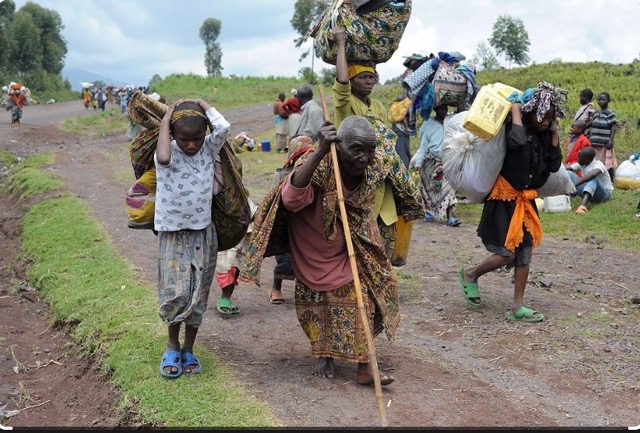
“The M23 spoke of liberation, but economically the situation is even worse than before,” said a shop owner in Goma, the largest city in eastern DRC. “The airport is closed, there are no banks, businesses have shut, people have no money to buy… we are just surviving.”
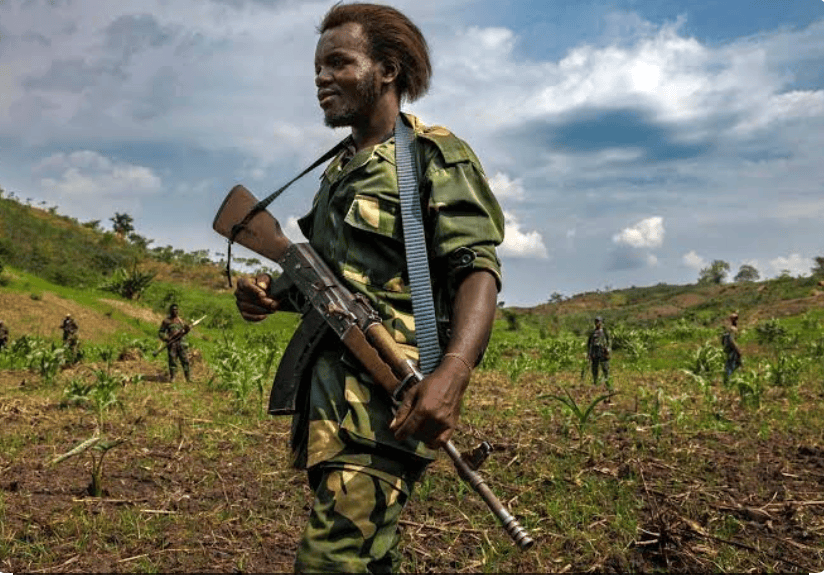
The M23 began its latest insurgency in 2021, seizing large tracts of territory before capturing the two main cities in the east – Goma and Bukavu – in early 2025. It now acts as a de facto governing power in an area where millions of people live.
Taxation forms the backbone of its financing system, extending from local companies and markets to transporters, cross-border businesses, ordinary residents, and even humanitarian organisations.
To cement its system and have greater autonomy in areas it controls, the rebels have also set up a parallel financial system, though these efforts have not yet proved especially successful.
Minerals like gold and coltan constitute another important part of the M23’s war chest, with lucrative mining sites and transport corridors subject to taxation and resource extraction.
Many of these minerals are smuggled across the border to the M23’s chief backer, Rwanda, which has thousands of soldiers on Congolese soil fighting alongside and commanding rebel operations.
The flow of minerals and other goods through Rwanda and onto global markets has intensified scrutiny of international complicity in the violence, and the wider exploitation of Congolese resources – a pattern stretching from Belgian colonial rule to today’s extractive capitalism.

“Criminal governance”
Much of the conflict in eastern DRC traces back to the 1990s after the genocide of the Tutsi in Rwanda. When Hutu genocidaires fled into eastern DRC, Rwanda’s new government followed them, backing rebels who challenged and toppled Congolese administrations.
The Tutsi-led M23 – the latest in a long line of Rwanda-backed insurgents – initially justified its rebellion by accusing the Congolese government of failing to implement a previous peace deal with the group, and by citing threats to local Tutsi communities.
While denying direct support to the M23, Kigali justifies the group’s fight on the grounds that genocidaires remain active in eastern DRC. Critics, however, say it is using the threat as a pretext for territorial expansion and economic exploitation.
As the insurgency has expanded, the M23 has developed national ambitions under a political wing, the Congo River Alliance (AFC in French). They have called for the removal of Congolese President Félix Tshisekedi and threatened to march on Kinshasa.
The rebels have “methodically consolidated a de facto, deeply illegal, parallel administration”, said Zobel Behalal, an expert at the Global Initiative against Transnational Organized Crime and a former member of the UN experts panel on DRC.
Behalal told The New Humanitarian that the “forms of criminal governance” created by the M23/AFC leave civilians with no choice but to finance the group, despite it being under UN and other international sanctions.
Much of the financing takes the form of taxes. Every day in rebel areas, trucks carrying goods pay fees at checkpoints, as do motorbike taxis moving between towns. Businesses, from shops and warehouses to informal traders, are also taxed.
Cross-border trade is another lucrative area for the group, with fees levied on fuel, agricultural goods, timber, charcoal, and manufactured products that pass through M23/AFC territory from and into Rwanda and Uganda.
“Before the war, our products easily passed through national army checkpoints and reached our customers in different areas. Since then, we have encountered significant difficulties.”
Though individually modest, these taxes provide the group with a steady and predictable income stream that helps maintain a quasi-state administration overseeing policing, justice, migration, customs, and other services.
At the same time, if too burdensome, the taxes risk undermining businesses already struggling in a difficult economic environment, ultimately shrinking the group’s revenue base.
A local businessman who opened a drinks factory four years ago said taxes paid to the M23/AFC contributed to the closure of his company. He also cited rising transport costs caused by the need to pass through multiple armed-group checkpoints.
“Before the war, our products easily passed through national army checkpoints and reached our customers in different areas,” he said. “Since then, we have encountered significant difficulties.”
Though some M23/AFC taxes already existed under the previous administration, there are additional levies that did not, as well as requirements for businesses to pay new registration fees, said Pascal Ndyanabo, an economist based in Goma.
Businesses are also unable to negotiate manageable instalments for paying taxes, he added: “The biggest difference is that, previously, it was possible to negotiate or stagger payments. Today, if you can’t pay, who will you complain to?”

Tax squeeze
Ordinary civilians also find themselves directly financing the group, through making payments for services such as water and electricity, and for requesting documents like land titles and vehicle records.
Some of these services are run by public entities that have been administratively taken over by the M23/AFC, while others are run by private companies that pay a fee to the rebels.
In some areas, residents also describe being required to contribute cash, labour, or goods. The rebels will often gather people and ask them to unload trucks, repair roads, build structures, or hand over part of their harvest to troops.
At the same time, however, the M23/AFC cannot squeeze the population and local business to the point where deepening poverty and hunger further undermine its already limited legitimacy.
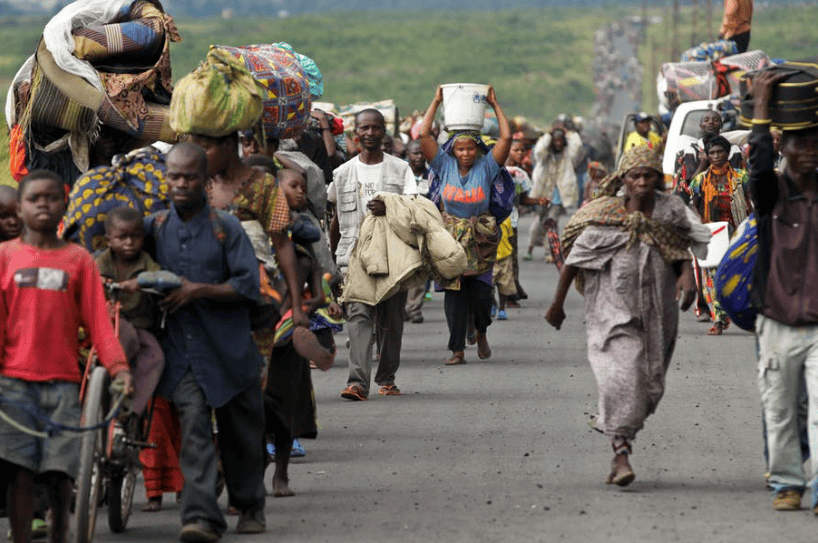
Many people are struggling deeply with the economic situation: The airport in Goma is closed, complicating deliveries of aid and imported goods; and ongoing fighting is preventing people from cultivating land and getting produce to the markets.
The closure of the formal banking system has added to the economic strain. Shortly after the M23/AFC took Goma, the government in Kinshasa ordered banks in rebel-held areas to shut.
Trade was soon paralysed, wages were frozen, and many people were cut off from their savings and access to loans. Money changers said exchange rates and shortages of foreign currency have forced them to source cash in Rwanda.
“Most of the transactions and trade now go through Rwanda. It is an expensive solution for both the population and the economic actors,” said Behalal, of the Global Initiative against Transnational

Organized Crime.
To circumvent the banking shutdown, the movement has attempted to revive the Caisse Générale d’Épargne du Congo (CADECO), a public financial institution that was created in 1950 and offers a range of financial services.
But while some CADECO branches have opened in Goma and Bukavu, they are disconnected from the national banking system and have no access to SWIFT, which is essential for international transfers.
Residents said the M23/AFC did try to encourage the population and local businesses to open accounts in CADECO, but it hasn’t worked as the group hoped, with many being wary of losing their funds and savings.
Last year, the rebels also set up a financial regulatory body, the Autorité de Régulation du Secteur Économique, Financier et des Assurances (AREFA), which made registration or licensing compulsory for financial-sector entities and individuals.
AREFA is supposed to function as a central bank in M23/AFC areas, and is particularly aimed at stabilising exchange rates and increasing the local money supply amid cash shortages.
But unlike the Congolese central bank, it cannot issue Congolese francs and does not have significant foreign exchange reserves.
Coltan cash cow
Taxation and exploitation of minerals constitutes another central plank of the M23/AFC’s war economy, and the highest profile in terms of international media coverage.
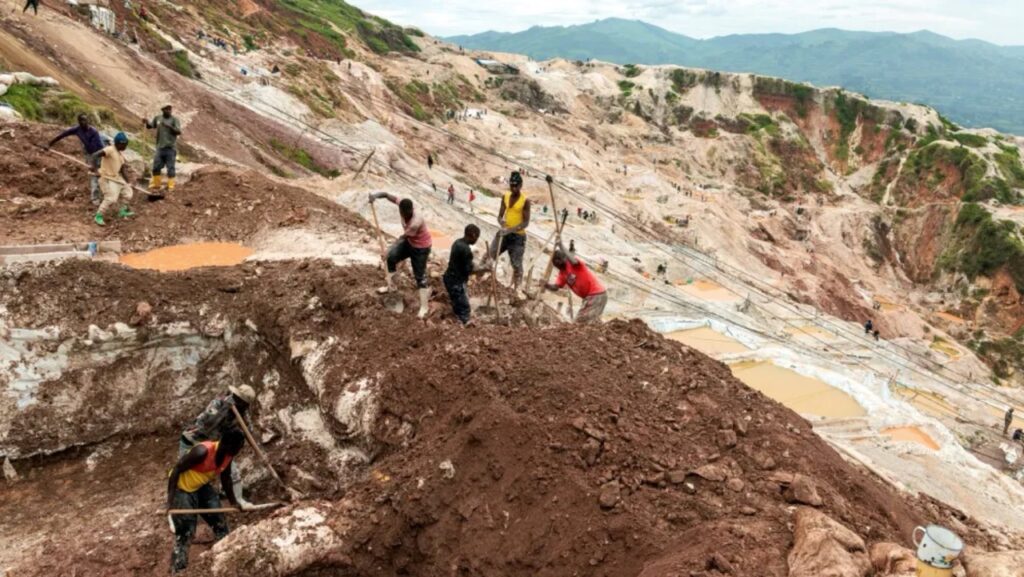
Part of the M23/AFC territory includes the Rubaya mines, one of the world’s major sources of coltan. This highly sought-after mineral is essential to the production of electronics and technology used around the world.
Many companies profit from the trade, from Chinese smelters and American capacitor makers to electronics companies that may include brands like Microsoft and Apple. By contrast, Congolese workers extract the mineral for a few dollars a day.
Armed group control and predation of Rubaya, which is in North Kivu province, is not new. Militias, state officials, and military personnel have long profited from it, but the actors taking a cut have now changed.
Since falling under M23/AFC control in 2024, miners, transporters, and traders seen as hostile to the rebels have been “gradually side-lined”, said a former member of a local mining cooperative. “You need recognition from the movement to operate,” they said.
Coltan shipments are taxed by the M23, according to people involved in the trade. They said checkpoints to the west of Goma weigh loads before per-kilogram fees are paid at a bank in Gisenyi on the Rwandan side of the border.
UN experts said in a 2024 report that the M23/AFC take in around $800,000 per month, or nearly $10 million a year, from levies collected from coltan mining, and that it taxes all actors involved in the production and supply chain.
Profiteering from minerals is not limited to Rubaya. Across North and South Kivu, the rebels have taken control of trading and transport corridors that link mining areas to regional markets, forging a war economy that creates powerful incentives to keep fighting.
The scale of those revenues is illustrated by the group’s seizure last year of the biggest gold mine in South Kivu. The Chinese company that owned the concession, Twangiza Mining, says the rebels have looted gold worth around $70 million.

How Rwanda benefits
As the rebels have expanded their control over economic activity in urban centres, businesses and networks linked to Rwanda have become increasingly prominent, according to UN experts and people interviewed for this story.
In Rubaya, for example, one local miner said “almost all the traders come from Rwanda”, whereas previously there were also plenty of Congolese businesspeople who were involved in buying coltan.
A beer retailer in Goma said their supplies have also increasingly come from Rwandan distributors closely tied to the rebel movement, and who sell pricier goods than before.
They said they previously sourced locally produced drinks from Bralima, whose brands are consumed widely across the country. But that changed after Bralima’s facilities were looted and became inaccessible because of insecurity.
“Before we had advantages, especially the rebates from Bralima and Brasimba,” said the alcohol retailer. “Now, we have been forced to buy products that come from Rwanda without rebates.”
Rwandan officials have also been accused of facilitating the export of Congolese minerals and other goods. Once in Rwanda, they are mixed with local production, and rebranded as of Rwandan origin.
Many of these arrangements are not new: Long before Rwanda began backing the M23, minerals were already heading there from DRC – either legally or through clandestine routes – thanks to a lower tax and tariff regime.
For Josaphat Musamba, a Congolese researcher at Ghent University, minerals are “not at the heart” of what he described as a multifaceted crisis – one rooted among other things in the ambitions of rebel leaders, regional geopolitics, and the legacies of past wars.
Still, he said the rerouting to Rwanda of minerals extracted from territories controlled by the M23/AFC constitutes a “central element in the tensions between Kinshasa and Kigali”.
In June 2026, for example, the US government sanctioned executives of a major gold refinery in Rwanda, accusing them of taking gold from DRC with the facilitation of Rwandan government forces.
Rates of coltan smuggling to Rwanda have also reached unprecedented levels since the M23 takeover, according to the UN. The country has become the world’s leading coltan exporter despite limited domestic production.
Sources described how international mineral traders previously based in North and South Kivu have obtained licences to open trading offices in Kigali, finding it more advantageous to base their businesses in Rwanda.
The move reflects the difficulty of legally exporting minerals from M23/AFC-controlled areas, where goods cannot get the required certifications. By moving to Kigali, traders can instead access the minerals once they have crossed and been relabelled.
A trader for one of several newly established Kigali-based exporting companies involved in purchasing coltan from Rubaya explained how the process works, while asking for their name not to be used.
They said the company – which has recently signed a purchase agreement with a Chinese business – has a transporter in Rubaya who brings minerals to Kigali with taxes paid and the required traceability tags in place.
The International Tin Supply Chain Initiative, which oversees mineral traceability in the region, has opened investigations into suspected false declarations of Rwandan minerals, while suspending certification procedures for minerals originating from M23/AFC territories.
But the scheme has faced repeated criticism over weak oversight, and the trade in Congolese minerals continues despite international pressure, fuelled by strong global market demand.
As well as being central to the war economy, Congolese minerals have also increasingly become crucial to US-led peace negotiations between the DRC and Rwandan governments.
A peace agreement was signed in Washington last year, but there are provisions in the deal to expand American access over Congolese minerals, which are currently dominated by Chinese companies.
For the Congolese government, US support is a way to gain international backing against the M23/AFC and Rwanda, which has long been supported by Western governments despite its destructive interventions in DRC.
For ordinary civilians, the growing profits generated by mineral wealth offer little relief. Caught between Kinshasa’s financial blockade and the M23/AFC’s expanding taxation system, many say they are struggling simply to survive.
This story was first published by the New Humanitarian