

Fear and survival: Reflections on a year under M23 rule in Goma
By Mushaga Akili, a journalist based in Goma, working under a pseudonym because of threats against media by the M23
A few weeks ago, I travelled to a cemetery in Goma where hundreds of people had been buried in mass graves after the M23 rebel group seized the city early last year. I was hoping to find people who could help me mark the anniversary of the invasion.
A few metres from the graves, I met Pascal, a day labourer. He said he passes the cemetery twice daily on his way to and from the city centre. I asked if he could help me find families with loved ones buried inside.
What followed was an emotional outpouring. Pascal spoke about injustice, the need for reparations, and the lack of respect for the dead. Then, as quickly as he started, he fell silent.
“Even if I keep talking to you, nothing will change,” Pascal said in Kiswahili, the main language spoken in Goma, the largest city in eastern Democratic Republic of the Congo. “So leave here, my dear friend, and don’t remind me of these events.”
Seeing how shaken he was, I abandoned my original mission. For the next hundred metres, we walked down the street talking about football. Pascal was wearing a Real Madrid jersey. It seemed like the best conversation to take his mind off the war.
So it is these days in Goma. People carry a lot on their minds – a city ruled by rebels, economically floundering, and under intense geopolitical scrutiny – yet too exhausted, or in many cases too afraid, to speak openly about it.
As a Congolese journalist living in Goma for the past year, I have been reporting on this reality up close, witnessing what happens when a rebel group (backed by troops from our neighbour, Rwanda) takes over a city of some two million people.
I have seen how the population has suffered — with airports and banks closed, jobs being lost, and uncertainty about the future. I have spoken to many people like Pascal whose lives have been upturned.
But a year under occupation has also been a year of resilience in the truest sense of the word. Many of you may know the dictionary definition of “resilience”, but come to Goma and you will see what it really means.
Businesses have had to innovate creatively to survive. Local solidarity has blossomed as humanitarian suffering has increased. And churches have become even more places of solace.
“Tell your neighbour that what they are going through today will also pass,” a pastor declared from the pulpit during a service I recently attended. “Amen, amen, amen, I receive,” the crowd responded with strength and courage.
“I try to forget it, but it always comes back”
My city is no stranger to war. It has felt the shocks of conflicts since the 1990s, when armed groups backed by Rwanda began pursing perpetrators of the genocide of the Tutsi, who had fled into eastern DRC.
The M23, another Rwanda-backed group, launched its rebellion in late 2021, ostensibly to protect Tutsi communities and enforce a prior peace deal – but in reality, analysts say, to advance the interests of Rwanda and rebel commanders.
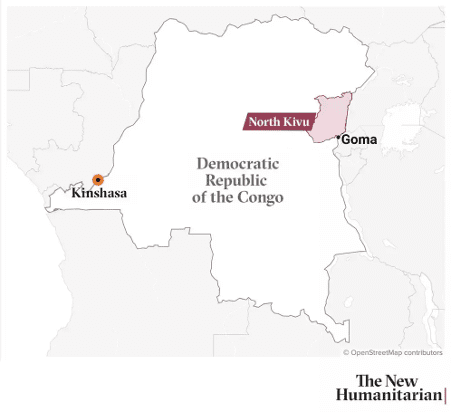
The rebels swept through large chunks of eastern DRC, claiming a revolution, before entering Goma – the capital of North Kivu province – in January 2025, seizing the city from the Congolese army and pro-government militias known as Wazalendo.
The battle was brutal, potentially claiming thousands of lives (though exact numbers remain disputed), and the event is still etched in the minds of many residents and visible on the streets.
This is especially evident in neighbourhoods like Kahembe, near Goma’s international airport. The area was hit particularly hard during the fighting because Congolese soldiers guarding the airport resisted strongly.
Today, some of the destroyed houses have been rebuilt, but the wounds of the residents remain. Simply recalling the events brings back vivid memories – some even cry as if it were yesterday.
Hellène, a cleaner, lost her husband and son when a bomb struck her house. She doesn’t know who fired the weapon. “I try to forget it, but it always comes back,” she said, asking, like most people I spoke to, for only her first name to be used.
Faustin, another Kahembe resident, was struck in the foot by bullets while at home. He was unable to reach a hospital for hours because of the fighting and has become disabled as a result. A former shop vendor, he is also now unemployed.
“It was my first time experiencing such a war in the heart of a city,” Faustin said. Like Hellène, he tries to forget what happened, but can’t. Instead, he prays every day, thanking God that his injuries are not even worse.

Traffic calm, communal work, and the retreat of the “40 thieves”
Some aspects of the M23 occupation over the past year have been positive in ways that may surprise readers who have seen the many reports of rebels abusing civilians.
When the group first entered Goma, some residents lined the roads and cheered. The reaction was largely pragmatic – an attempt to signal goodwill to the new authorities – but there was also a measure of relief.
Before the takeover, Goma had become heavily militarised, with residents suffering under the chaos and abuses of the Congolese national army and Wazalendo militias. They were terrorising parts of the city in the name of fighting the M23.
Some aspects of the M23 administration have been quietly appreciated by residents. Certain official procedures – such as obtaining certificates or immigration documents – are faster than before, when bureaucracy caused long delays.
The rebels have also carried out some infrastructure works that parts of the population welcome, including efforts to improve access to water and electricity in a city long plagued by outages and load shedding.
Security has improved in some areas too. Residents say the so-called “40 thieves” phenomenon – named after the folktale Ali Baba and the Forty Thieves – that plagued Goma with night-time house break-ins and killings, has largely receded.
People’s everyday behaviour has also changed as well. Before, in many ways, everyone behaved as they pleased in public. Now, people are exercising greater self-control, whether it’s through their actions or words.
You notice it particularly with traffic. Before, there were always jams at roundabouts and intersections, and traffic cops were involved in shady dealings of various kinds. But today, drivers follow the rules, wary of M23 officers and breathalyser tests.
The rebels have also introduced salongo, a mandatory communal work system with some real benefits. Every Saturday morning until 10am, residents clean their homes and streets, contributing to the upkeep of Goma as a whole.
Whippings, fines, and censored journalists
Still, none of this masks the massive anger that many residents feel toward the rebels, especially those who lost loved ones last year. The M23’s extensive support from Rwanda, which has spent so long destabilising DRC, adds to the outrage.
Most critically, the public order and discipline that is visible on the streets conceals a darker reality: that it is widespread fear of the rebels that is driving people to comply with their rules.
The truth is that we can no longer express ourselves freely, and that anyone who tries to resist the M23 risks harsh punishment — penalties that many have endured and deeply resent.
Goma has seen fewer abuses than other villages and towns because the rebels care about their image here. But there have still been round-ups of suspected Wazalendo fighters, executions of alleged criminals, and forced recruitment of young men.
“Mistakes are unforgivable, which is why we do everything to obey those who govern us,” a taxi-bus driver told me. He said he is particularly afraid of the routine whippings that rebels mete out on people, often in public.
There are many issues I would like to report on – human rights, security, politics, minerals, finance – but pursuing them risks running into problems with the authorities.
Another Goma resident told me how his brother took a long time to recover from his injuries after what he described as inhumane treatment at a jail near an extinct volcano, where, he said, “prisoners are whipped mercilessly”.
“You should do everything that you can to avoid going there,” the resident told me. “Some detainees who have escaped those jails succumbed to their injuries because it is hell there.”
Even the salongo communal work system is enforced through a climate of fear. Anyone who opens their shop during the designated hours risks physical punishment or heavy fines.
A few months ago, Goma’s own mayor was temporarily suspended from his position after ordering a taxi driver to be beaten for violating the salongo rules. People nearby filmed the incident, and the footage went viral.
As a journalist, I am acutely aware of how repressive the M23 is. There are many issues I would like to report on – human rights, security, politics, minerals, finance – but pursuing them risks running into problems with the authorities.
In practice, reporting requires prior authorisation from the M23 communications department. Journalists must explain their topic and intended approach. If it is judged too sensitive, permission will not be granted.
And even when authorisation is given, the process doesn’t end. Journalists are sometimes required to provide proof of publication before receiving approval for future reporting – allowing the authorities to review what has been written.
Even social issues are often covered cautiously. Digging too deeply can quickly lead to findings that displease the M23, and that risk severe consequences for those reporting them.

Jobs losses and empty markets
All these issues have been compounded by a dire economic situation. Since the M23 took control, the Congolese government has shut down banks in Goma – a move intended to constrain the rebels but which has deepened everybody’s hardship.
Money no longer circulates freely and US dollars are in short supply. Mobile money services have helped paper over the cracks, but many residents complain about exploitative agents taking hefty cuts on withdrawals.
Some locals have opened accounts in Rwanda to access cash more easily, though that requires crossing the border – a significant inconvenience simply to withdraw their own money.
For their part, the rebels have closed Goma’s airport, severing our city’s links with the rest of the DRC and the wider world, and complicating logistics for businesses and humanitarian agencies alike.
Travellers now often pass through Rwanda’s capital to access an international airport, or travel overland through Uganda before re-entering DRC to reach the nearest city with domestic flights.
Many people have lost their jobs as trade has declined, or as businesses and aid groups have closed down or relocated to government-controlled Beni, along with North Kivu’s provincial administration.
“The truth is, in Goma right now, we’re not really living – we’re just surviving.”
One man called Tumaini recently told me that his household appliance business was destroyed when all the stock was looted during the fighting last year. “Our boss decided to close the business, and now we’re out on the street,” he said.
Arsène, who worked as an administrator at a local company, said he lost his job as customers dried up, leaving his wife as the sole breadwinner for his family. “The truth is, in Goma right now, we’re not really living – we’re just surviving,” he said.
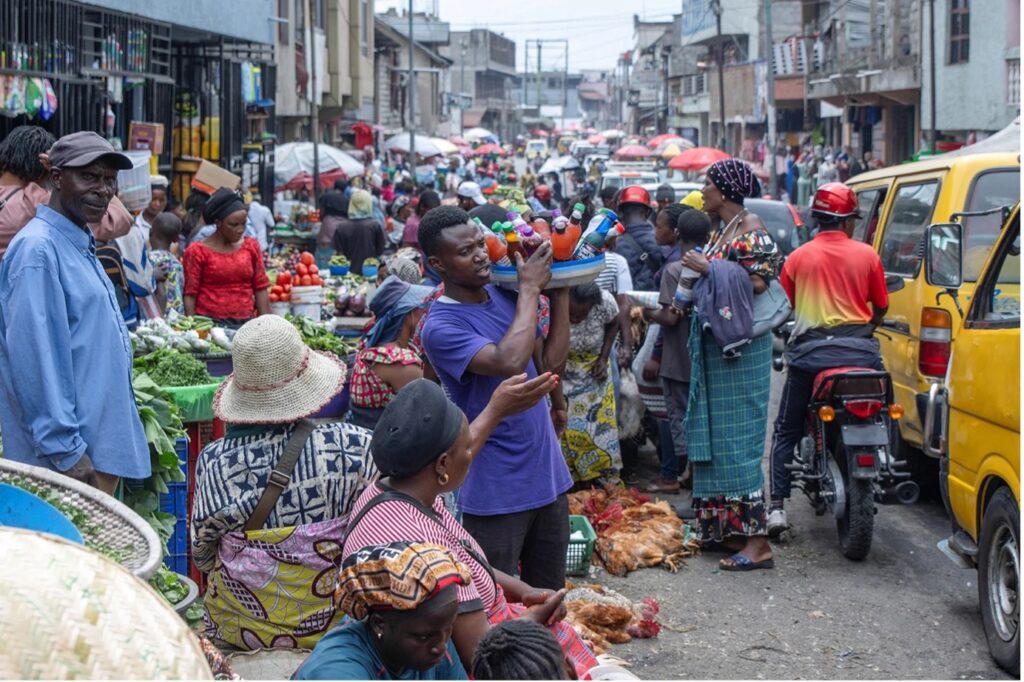
The economic slowdown is even evident at the famously lively Virunga market, a major trading hub in Goma. Traders there say even falling prices for fruit and vegetables aren’t bringing back customers.
“We have products but lack customers,” said one trader, who asked not to be named. They said that while the M23’s consolidation of control has reduced fighting and made farming easier, it hasn’t necessarily translated into better business.

“If we don’t help each other, who will?”
Faced with everything Goma is experiencing, people might be forgiven for withdrawing into themselves – and yet, in many ways, the opposite has happened: Citizen initiatives to support vulnerable families have flourished.
Last September, at the start of the school year, young people organised donation drives, collecting everyday items to distribute to schools. It wasn’t a single effort: I saw more than a dozen posts on social media calling on people of goodwill to join in.
“There were parents who couldn’t afford to give their children basic necessities. We helped them with what little we had – notebooks, school bags, and other essentials. If we don’t help each other, who will?” said a volunteer involved in the initiative.
During the Christmas season, I participated in a youth-led charity event at an orphanage. Such events of course didn’t begin with the M23 takeover, but they still show the resilience of the population to carry on.
“We are all going through difficult times, but we organised ourselves with what little we could find to celebrate with these children,” one volunteer told me. “We wanted to bring a smile to their faces, so they feel loved and not forgotten.”
The city’s religious community has also played a crucial role in helping people manage this crisis. Churches act as spaces of refuge, offering strength to those struggling, and spreading hopeful sermons.
The message from the pulpit is often the same: things will change.
I hope so too.
This article was first published by the New Humanitarian