


By Marnix de Bruyne
Without transformation, without public apologies, people cannot move on from what happened
Samuel Kosgei, human rights organization Justice and Peace
We are a church of the living, not of the dead
Paul Karanja, pastor
During ethnic violence in Kenya in 2008, the church in Kiambaa was a symbol of the horror that shook the country. Kikuyu who had fled to this church were killed on New Year’s Day when Kalenjin youths set it on fire. In 2009, the victims were officially reburied. But the graves are no longer visible. “History is being erased.”
The noise came from all sides on that first day of January 2008 in the village of Kiambaa, in Uasin Gishu County in western Kenya. Hundreds of young Kalenjin, the ethnic group that has traditionally formed the majority in the region, advanced in a long line across the grasslands and the still bare cornfields. Naomi, a farmer, day laborer, and herself a member of the Kikuyu, a minority in this region, was cooking in her simple house when she heard their war cries. “Ho-hee-hooo, ho-hee-hooo,” she imitates, in a low, hollow voice. She saw smoke in the distance, which made it clear that the houses further away had been set on fire.
For days there had been ethnic violence in the region, targeting the Kikuyu community. Naomi did not hesitate and ran to the small Pentecostal church, a few hundred meters away, belonging to the Kenya Assemblies of God. Her grandmother, daughter, and granddaughter, still a baby, and about a hundred other Kikuyu were already there. They would be safe here, they thought.
Inside, it was packed, while outside, Kalenjin armed with bows and arrows, clubs, and machetes had surrounded the church. Out of nowhere, flames appeared: mattresses and blankets thrown in front of the wooden door had been doused with gasoline and set on fire. The Kikuyu wanted to flee, but the Kalenjin stopped them. All except one, a boy named Emanuel. “Stop, stop, let them through,” he shouted. Naomi saw an opening and ran outside with the baby in her arms, shortly before the mud walls collapsed. Her grandmother and at least sixteen others died in the flames or later from their burns. Dozens of others had to be treated in hospital.

Election fraud
The violence around Kiambaa was part of the post-election violence that broke out after the elections on December 27, 2007. Contrary to all opinion polls and the trend of the initial results, incumbent President Mwai Kibaki was declared the winner, with a narrow lead over his rival Raila Odinga, who in Uasin Gishu was supported by Kalenjin politician William Ruto. An hour later, Kibaki was hastily sworn in, without the dignitaries that usually attend such a ceremony.
The general perception was that election fraud had been involved. The anger of many Kenyans focused on the Kikuyu, the ethnic group to which President Kibaki belonged. In Uasin Gishu, they are a minority. After independence in 1963, many Kikuyu had bought land that had become available after the departure of British planters, which led to them being seen as intruders by many Kalenjin.
The violence that erupted in late 2007 lasted two months, including waves of retaliatory attacks. At least 1,100 people were killed throughout Kenya, and more than 660,000 Kenyans were displaced. It only came to an end when, after international mediation, the political rivals decided to govern together: Kibaki remained president, Odinga became prime minister, and Ruto became minister of agriculture.
It is the end of 2016 when Naomi, then in her late forties, and her sister Tabethe, in her early thirties, talk about those days on a wide two-seater sofa in their house built of wood and clay, with a floor of compacted earth. Above the sofa hangs a framed photo of a serious-looking elderly woman. Their grandmother.
Naomi and Tabethe prefer to keep their surnames unmentioned because of the Kalenjin who live around them. Since they suddenly turned against the Kikuyu in their midst, Naomi no longer trusts any Kalenjin. “You don’t know what’s in their hearts,” she says. “Once a snake bites you, you always remain afraid.”
Tabethe knows at least three “attackers” whom she saw standing near the church at the time, she says. She recently helped one of them with the corn harvest for three days. The farmer knows that she knows what role he played at the time, but they don’t talk about it. She doesn’t feel good about it, but she has to survive. “I have no choice.”

Turning point
‘Kiambaa’ became a turning point in how the world viewed the violence. Images of a wheelchair on top of the charred remains of the church, whose owner also had been burned, were seen around the world. It made it clear that this was more than just anger over election results.
As a step toward reconciliation, fourteen identified victims of the church fire were buried in an official ceremony in May 2009, along with at least 22 unidentified bodies whose deaths were attributed to the fire. President Kibaki led the official memorial service. However, this did not bring much reconciliation: almost all the invited Kalenjin leaders from the area stayed away.
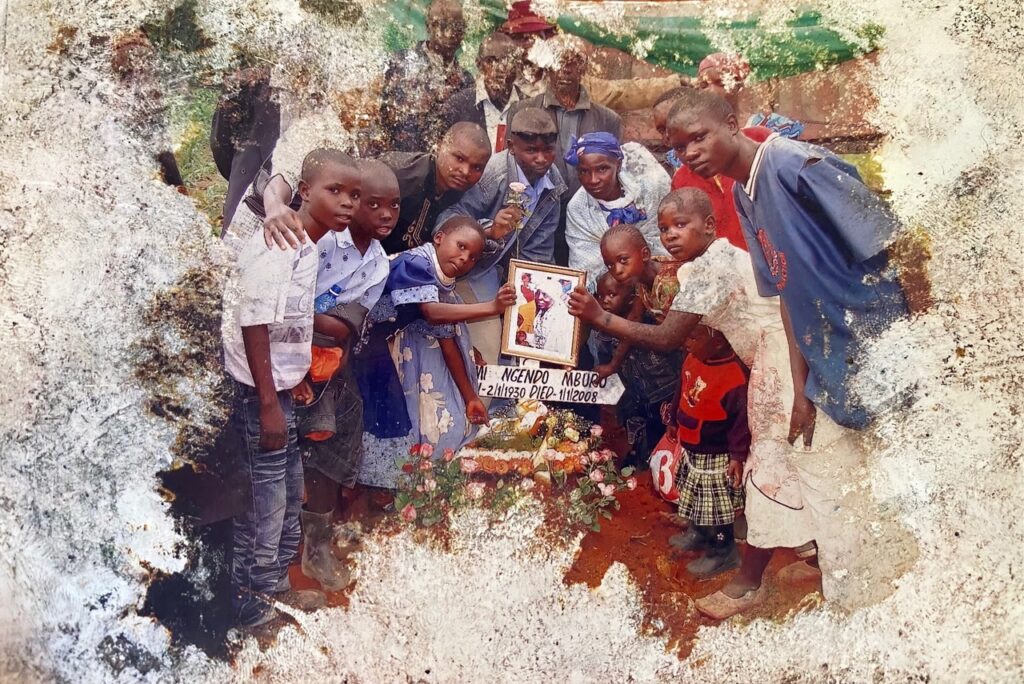
On that December day in 2016, Naomi and Tabethe are quiet willing to show us the graves. Next to a small makeshift church made of corrugated iron sheets, there are weathered wooden crosses, painted with black letters, with January 1, 2008, as the date of death. Sometimes there is a name on it, sometimes only “unknown.”
Naomi has to search for a while to find her grandmother’s cross. It has fallen down and is hidden deep in the tall grass, in a corner of the field. The plaque with her grandmother’s name, date of birth, and date of death is split in two.
Churches under construction
In June 2022, on a return visit to Kiambaa, the lives of Naomi and Tabethe have improved. They now live in brick houses, with a television in the living room – and the photo of their grandmother still hanging on Naomi’s wall.
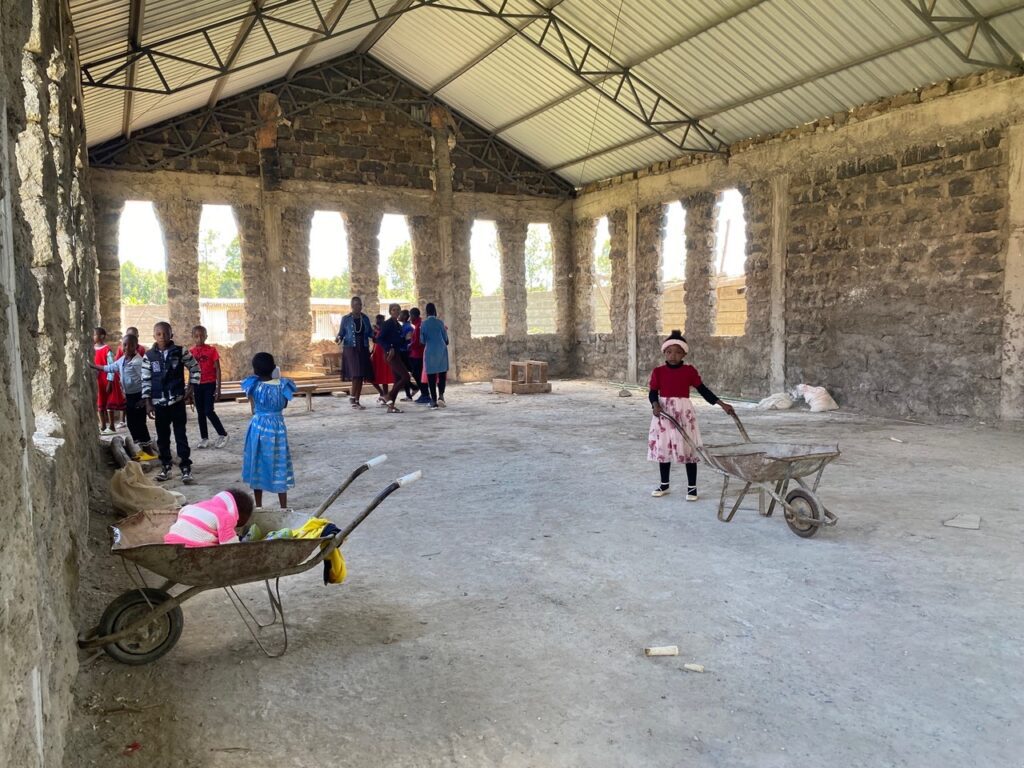
The church grounds at Kiambaa now look completely different. Two imposing stone churches are under construction, covering dozens of square meters. One is built of aerated concrete blocks, the other of natural stone, with recesses for arched windows, like Gothic churches have. Nothing remains of the crosses or graves.
It is a few months before the national elections. The main presidential candidates are William Ruto, vice president since 2013, and Raila Odinga, leader of the Azimio la Umoja coalition, who turned from ally in 2007 to rival. It turns out that Ruto’s UDA party is financing one church, through Ruto’s local confidant Oscar Sudi, a member of parliament and businessman. The “Gothic” church is sponsored by Odinga’s coalition.
Survivors such as Tabethe and her sister were not asked about the new churches, says Tabethe. “Ruto is building the churches because he wants to make a good impression, hoping to be elected. And he wants us to forget the violence,” she says in her living room with three three-seater sofas.
When her grandmother was still alive, life was easier, she says wistfully. Her brothers listened to the older woman, even when they were drunk. “I hope there will be a beautiful grave for her someday.” What it should look like? “There should be a monument with a large cross. And a text especially for Grandma.” She thinks for a moment, and then says what should be written on it: “I wish you a safe journey. Our Lord Jesus Christ will receive you. You didn’t want to go yet, but you were forced to.”
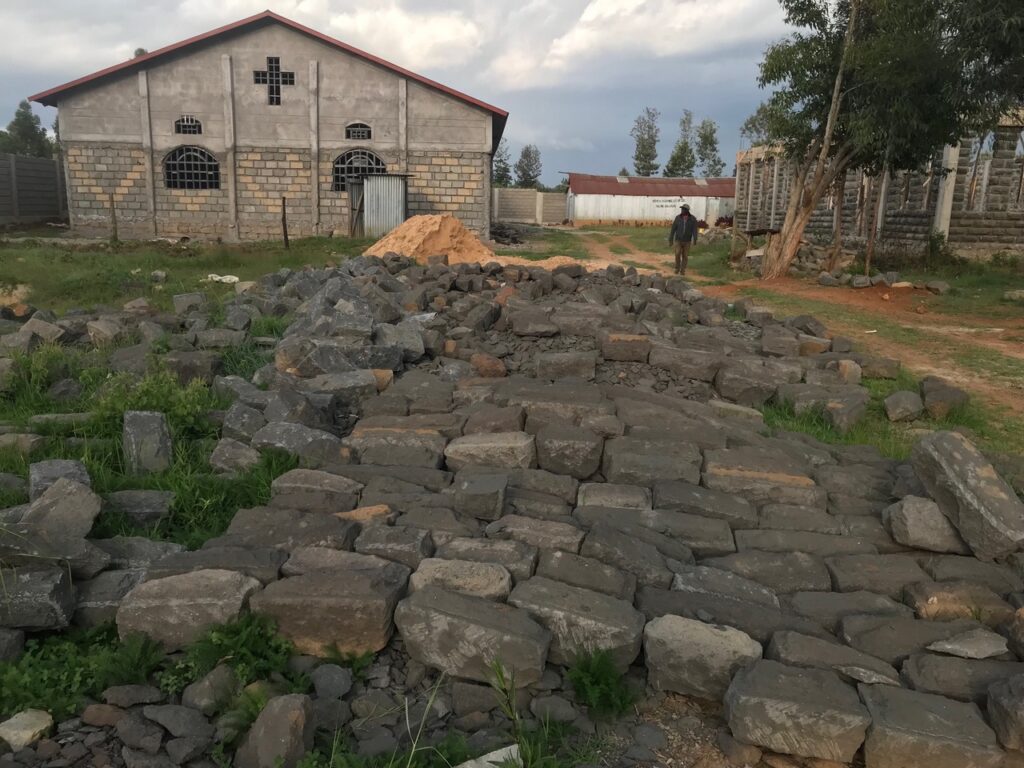
Church of the living
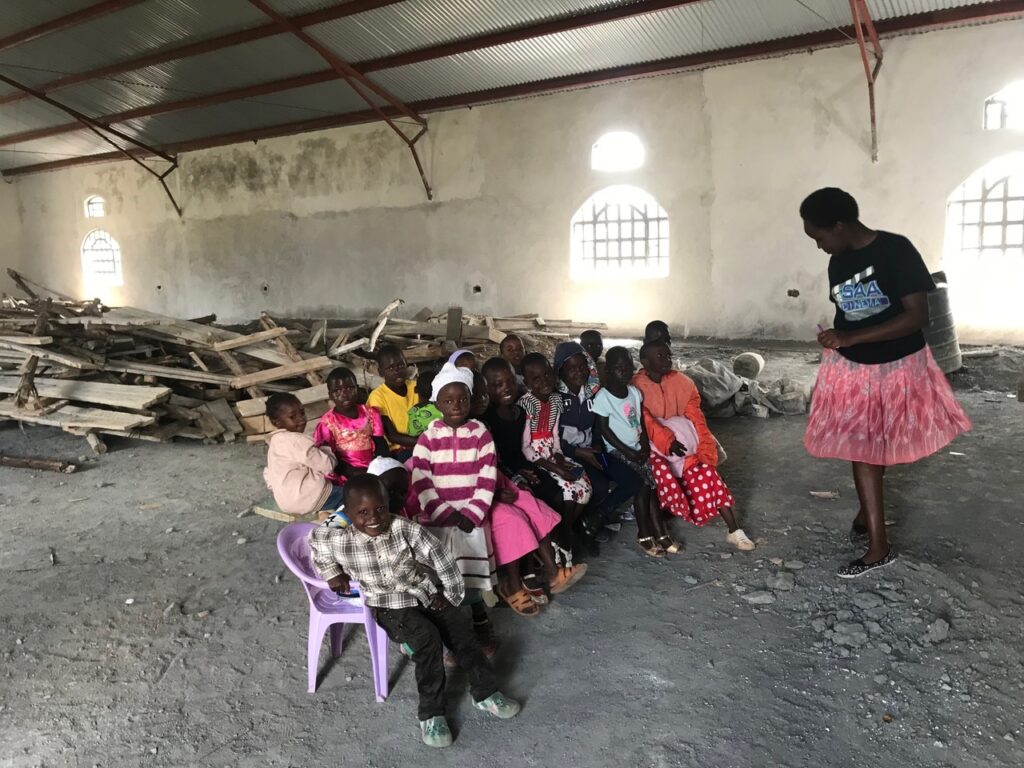
That Sunday, a service is held in the makeshift church in Kiambaa for a group of children and no more than 25 adults. “We are a church of the living, not of the dead,” says Pastor Paul Karanja after his sermon about the graves. “We don’t want to remind people of the violence.” When asked whether the churches under construction are not too large for the small community, he says that you have to look ahead. The region, which currently consists of cornfields and homes without electricity, “will one day develop into a metropolis.”
In the office of the Catholic human rights organization Justice and Peace in nearby Eldoret, Samuel Kosgei expresses his indignation about the churches in Kiambaa. Their construction is “a way of erasing history.” Politicians want to get rid of the festering wound, “which reminds them that they were unable to protect the people in their own district.”
Kosgei and the then bishop of Eldoret were among the first responders to arrive at the smoldering remains of the church in Kiambaa a few hours after the fire. “We found thirteen bodies in the church, one just outside, and then there were three more people in hospitals who had succumbed to their burns.”
The Catholic Church should have been more alert, he adds pensively. “We should have bought the plot shortly after the fire, when everything was still fresh and chaotic. Then we could have taken good care of it until we could erect a monument. Now it’s too late. The land belongs to the Kenya Assemblies of God, and they can do with it as they please.”
But he is disappointed, because the wounds in the community are still fresh. “Without transformation, without public apologies, people cannot let go of what happened and history may repeat itself.”
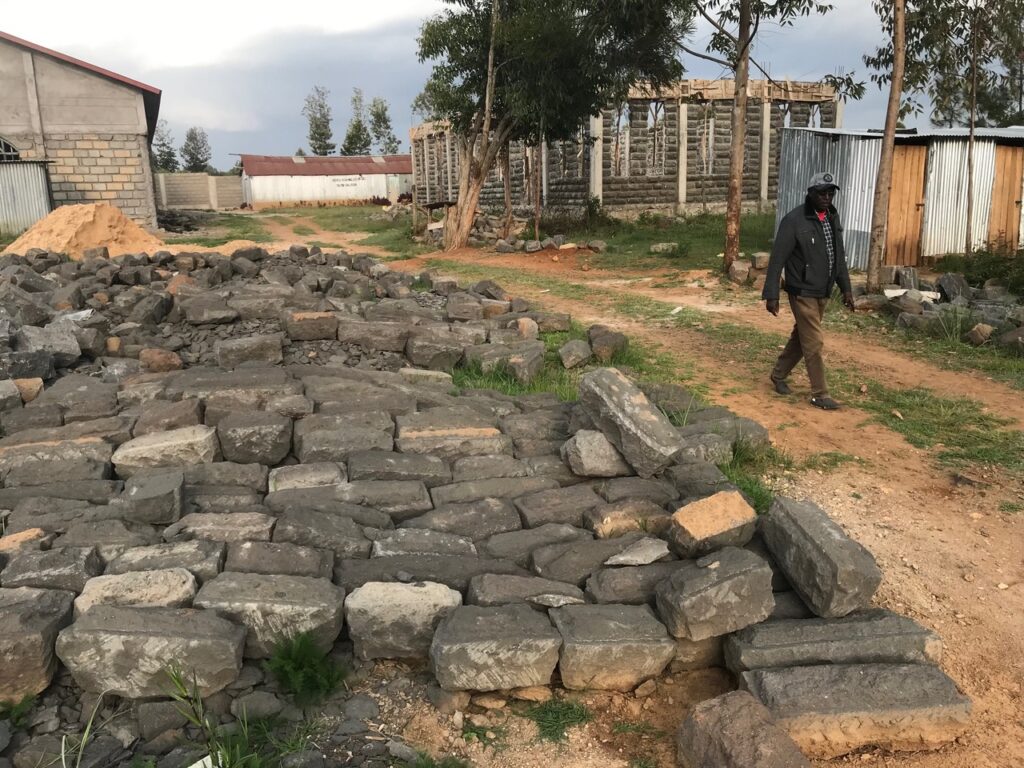
‘Image of shame’
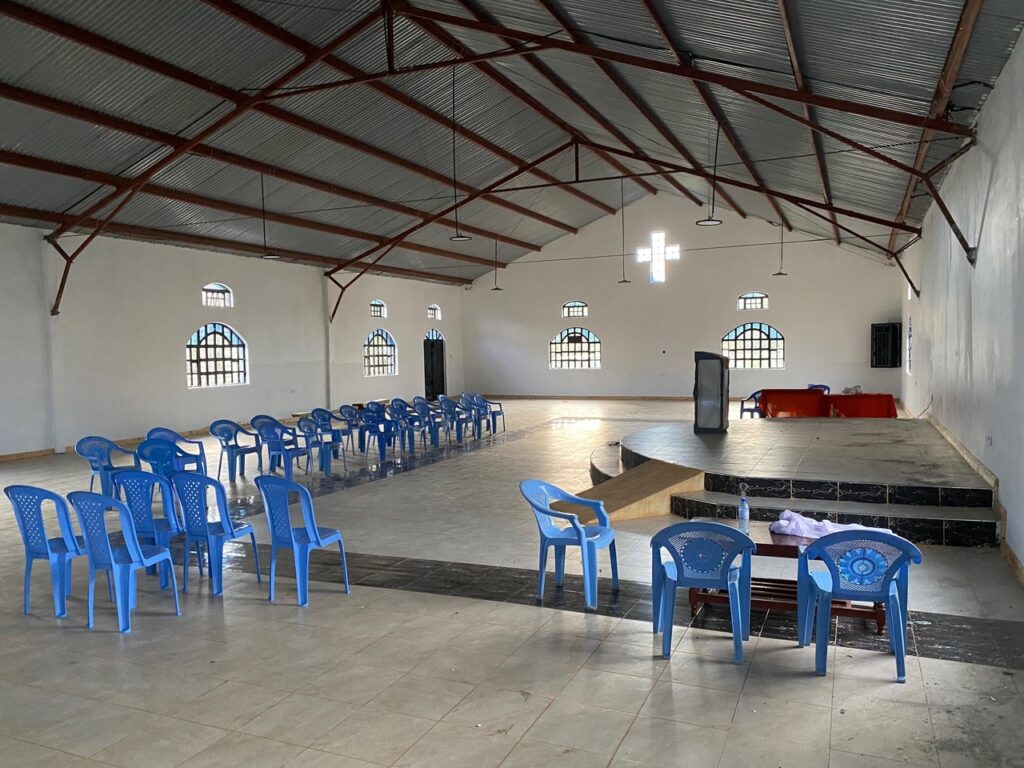
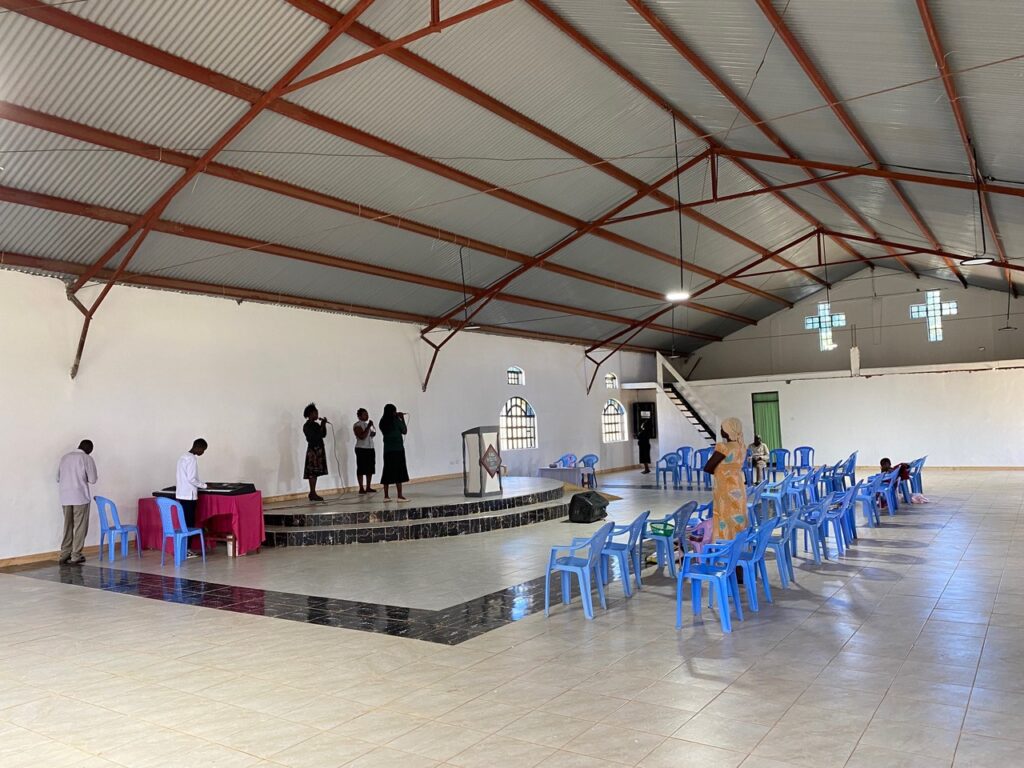
In November 2024, the largest church in Kiambaa appears to be completely finished. The exterior walls of the church, partly painted bright white, gleam in the sun, while inside, the floor is covered with shiny beige tiles. The ‘Gothic’ church now has a roof, but is as unfinished as two years earlier. Grass grows where the graves once were. There is still no reminder of the Kikuyu people who perished in the flames here.
Inside, Paul Karanja leads the service in a purple suit with a brown and gold striped tie. His wish to see the congregation grow has not come true: only seven of the thirty blue plastic chairs around the stage, in a hall that can accommodate perhaps up to two hundred people, are occupied.
Chatting in his office afterwards, Karanja is surprisingly open about the construction of the churches. Karanja had often prayed to God to change “the image of shame, of sin” surrounding the church in Kiambaa. The offer to finance a new church by Oscar Sudi, who, according to Karanja, wanted to clear the name of the Kalenjin, came at just the right time. When members of the Azimio coalition made the same offer, he decided that a second church would serve as a Sunday school for children and teenagers. Thus began the construction of the “Gothic” church.
After William Ruto won the elections, Sudi kept his word and had the ‘main church’ completed. Representatives of the Azimio coalition, which had lost the elections, told him he could forget about completion. “The mother church, the Kenyan Assemblies of God, then paid for the roof itself to protect the floor and walls from the rain.”
And the graves? Karanja still does not even want to place a plaque in memory of the tragedy. “That would not be wise. Then people would keep thinking about the events of that time. My congregation is mixed, there are Kikuyu and Kalenjin. Some would be hurt.”
Monument
Naomi, now 53, has never been to the new church and has no intention of going. She has her own Pentecostal church, the Harvest Connection, which she sometimes attends on Sundays. “They should have used the money for that second church to renovate the graves,” she says in her house down the road.
She still hopes that a monument will be erected for the victims of Kiambaa. A memorial service there might attract her former neighbors, whom she would like to see again. “So many people fled and never returned.”
Tabethe has a slightly different opinion than her sister. She has considered joining Karanja’s church, she says. Then she would be close to her grandmother every week. “When I think back to that time, I feel love. I am also still happy that I am alive.”
It turns out that Tabethe has her own little monument in her home. She goes to her bedroom and points to a rough wooden side table. When she returned to her home in 2008, after a long stay in a tent camp for displaced persons, she found that it had burned to the ground, along with everything inside. Only a side table and a chair had survived the flames. “I burned the chair; I needed firewood. But I always kept the table as a memento.”
Pictures by Marnix de Bruyne, except the one on the grave site from family archieve
This is an edited preview of Als een slang je bijt, blijf je altijd bang – Geweld en straffeloosheid in Kenia (When a snake bites you, you always remain afraid – Violence and impunity in Kenya): http://stage.singeluitgeverijen.domains.icontact.nl/querido/boek/als-een-slang-je-bijt-blijf-je-altijd-bang/#:~:text=Als%20een%20slang%20je%20bijt%2C%20blijf%20je%20altijd%20bang%20%2D%20Querido
The book launch took place on December 4 in Amsterdam, which can be watched here. It is largely in Dutch, but the Kenyan journalist and writer Oyunga Pala makes important comments at minute 34: https://hva-uva.cloud.panopto.eu/Panopto/Pages/Embed.aspx?id=897c2bb9-8605-4258-9648-b3a3008aee30&start=2390.817020395667& fbclid=IwY2xjawOvWTFleHRuA2FlbQIxMABicmlkETBCQ3l1MkFPZGswcWZkSDF0c3J0YwZhcHBfaWQQMjIyMDM5MTc4ODIwMDg5MgABHqTqwtv -HK6QCM2Ms5CV1WQ51s1F-RdTciHNTxirt-cjKkAouc-_yfyjFJxZ_aem_ZQzVuyMOG3XXGouYg7Lxmw
The original version in Dutch of this story was published in the Dutch newspaper NRC: https://www.nrc.nl/nieuws/2025/12/01/van-de-graven-van-de-levend-verbrande-kikuyu-is-in-het-keniaanse-kiambaa-niets-meer-te-zien-a4913698