
Koert Lindijer has been a correspondent in Africa for the Dutch newspaper NRC since 1983. He is the author of four books on African affairs.
Photo’s by Petterik Wiggers
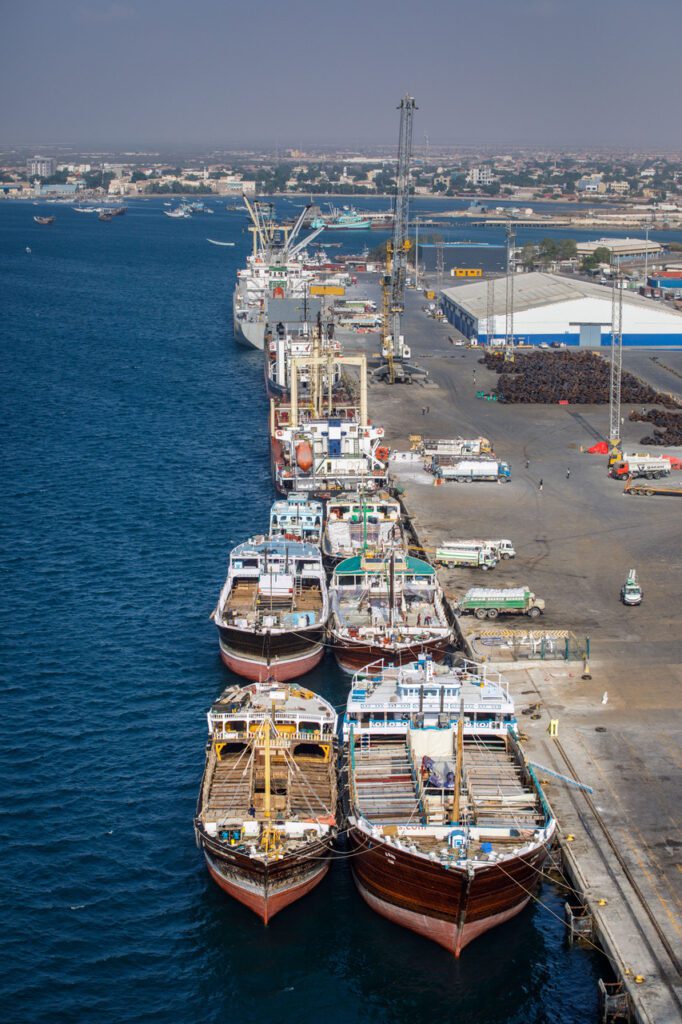
It is only when Ayante Sakal is in his crane, 75 meters above the quays of the port of Berbera in Somaliland, that he can see the military base of the United Arab Emirates. No one knows exactly what is happening there. “It is a restricted area,” says the employee of the port, built and operated by the Emirati port company Dubai Ports World (DP World).
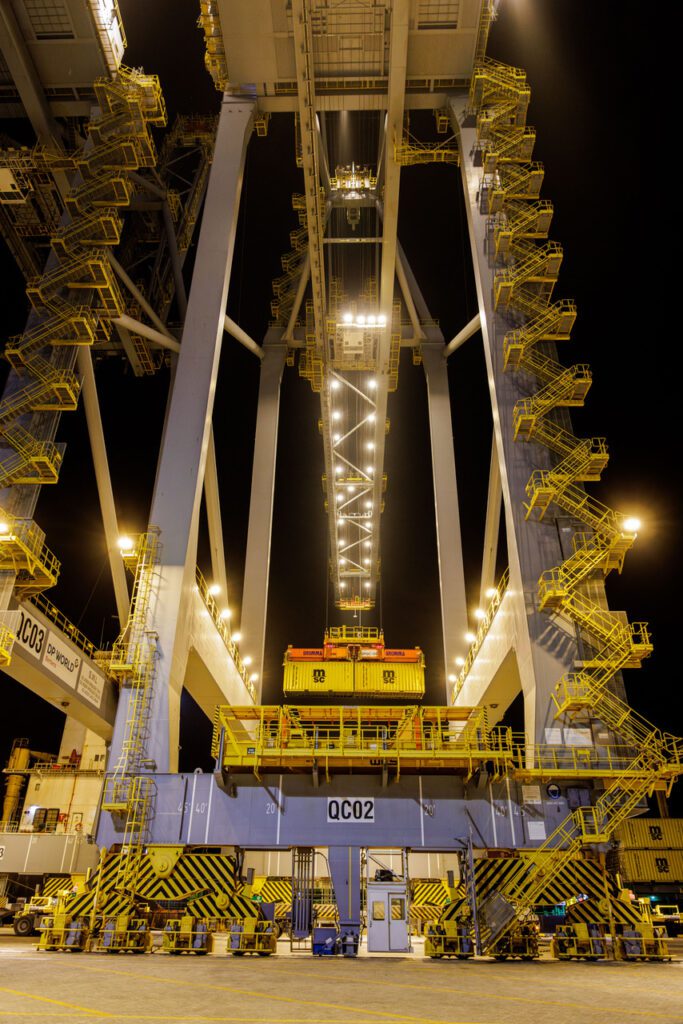
While a battle rages on the other side of the Arabian Peninsula surrounding Iran, the Red Sea is also becoming increasingly militarized. Nowhere on the African continent are there as many foreign military bases as in the Horn of Africa, the strategic region surrounding the southern entrance to the Red Sea. The Emirates have emerged as one of the most influential players along the more than 3,300-kilometer-long Somali coast, but major powers such as the United States and China, as well as the medium-sized powers of Turkey, Egypt, and Saudi Arabia, are also trying to strengthen their position there. The three gigantic ship cranes towering over the coast of Somaliland mean more than just a massive capacity expansion for port company DP World. For the Horn of Africa, they also symbolize a shift on the geopolitical map.
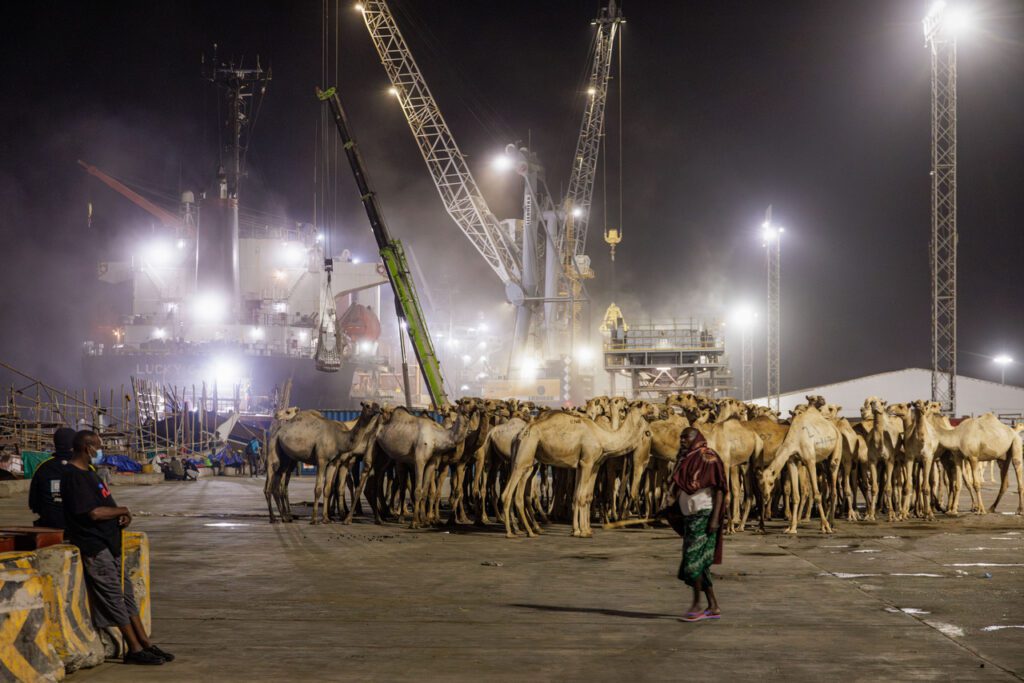
The blue-green Red Sea has been a busy area throughout the centuries. For centuries, Berbera has been a strategic trading center connecting the interior of Africa with Arabia, India, and the Roman Empire. Merchants from the Middle and Far East arrived in the port city with the monsoon winds in their sails. Known for the export of cattle, frankincense, and myrrh, Berbera was a medieval center of a sultanate, which was later occupied by the Ottomans, Egyptians, and the British. Flooded with the scents of fish and cattle in the narrow streets, the city displays the characteristics of that past, with a Turkish mosque from 1840, (the remains of) a synagogue from the early 1900s, the former British governor’s residence built in the Indian style, and numerous picturesque Arab merchant houses.
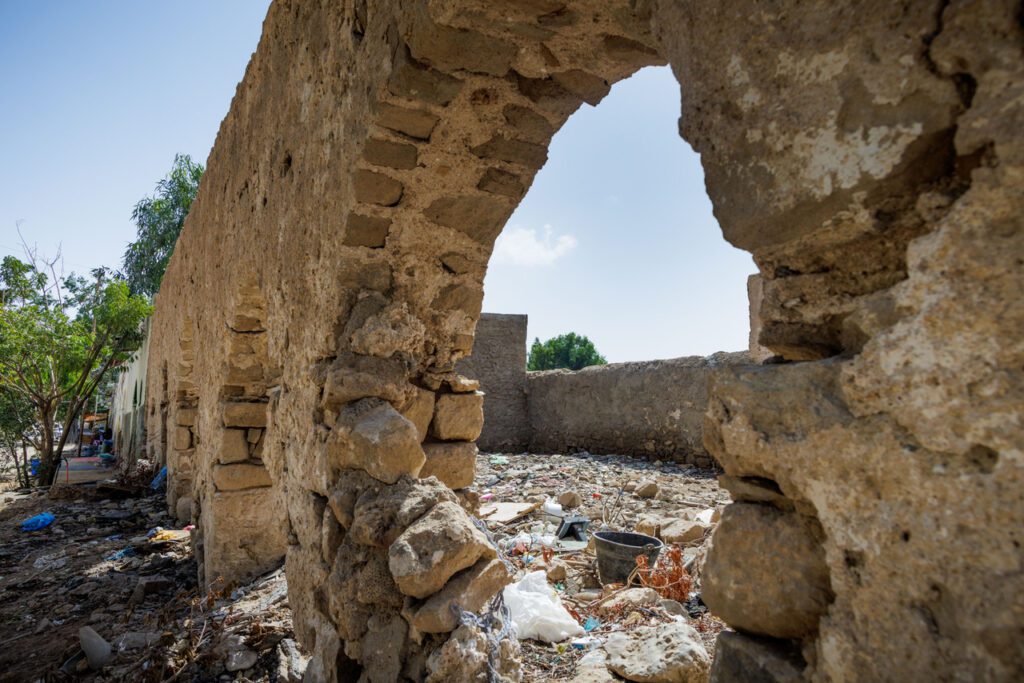
The remains of the synagogue in Berbera
From these shores, Homo sapiens left the continent 80,000 years ago and spread across the planet. From 4,000-year-old Sheila in what is now called Somaliland and from thousand-year-old Suankin in Sudan, inhabitants conducted business with Arabs. The famous Queen Sheba traveled from the Eritrean coast to King Solomon in Jerusalem 2,000 years ago and became pregnant by him, which heralded the beginning of the Abyssinian Empire.
The chain of deep-sea ports along the Red Sea coast now constitutes a coveted asset in the changing international world order. The small state of Djibouti, located further along, is already jokingly referred to as the ‘international republic of Djibouti’. The United States and China maintain military bases there in close proximity to each other, with facilities belonging to Japan and France in between. Moreover, a European naval mission against piracy in the Red Sea and the Indian Ocean operates from Djibouti, waters where the smuggling of weapons, drugs, and people has been rampant for years. Meanwhile, Russia is negotiating with Sudan regarding the construction of a naval base in Port Sudan, on the west coast of the Red Sea.
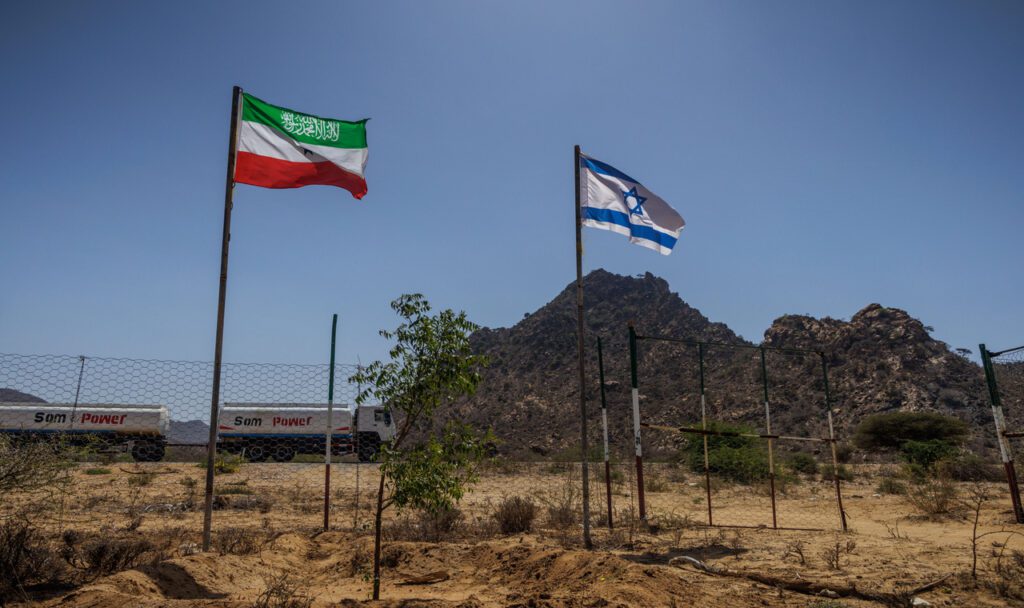
Israel wants more control over the Red Sea
Israel also appeared on the scene late last year when it became the first state to recognize Somaliland, the region that seceded from Somalia in 1991 but remained internationally unrecognized. With that recognition, Israel could potentially establish a strategic bridgehead on the Red Sea. An estimated 12 percent of world trade passes through this strait. From the African coast, the Arabian Peninsula is visible. In Djibouti, where the distance to Yemen is only a few tens of kilometers, the bombardments in the Yemeni war can sometimes even be heard.
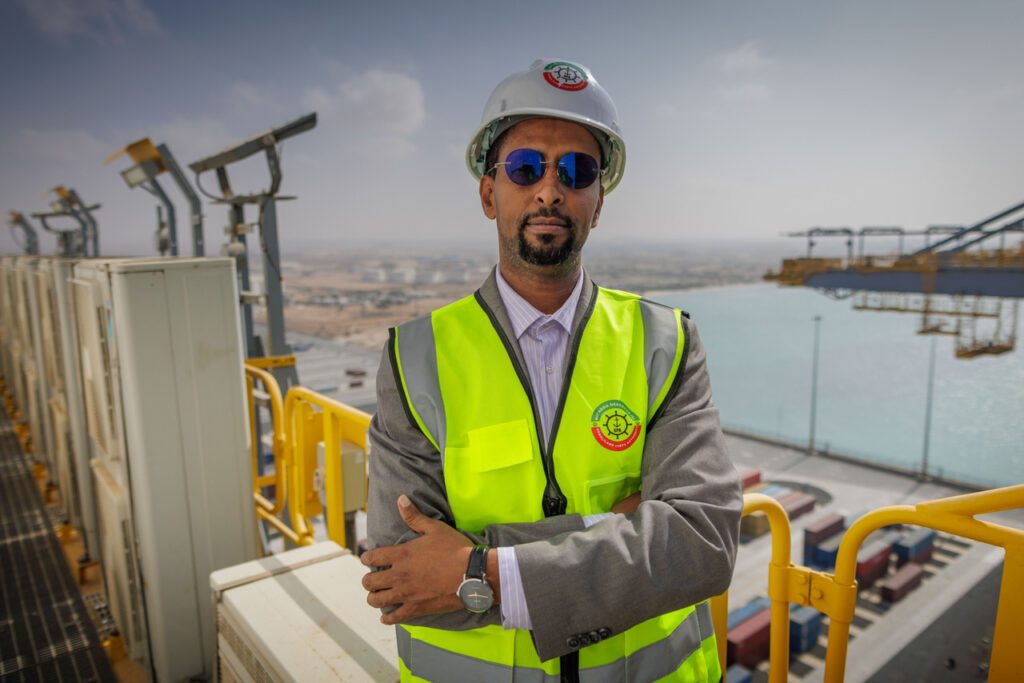
Ali Dirie Ahmed
“There has always been rivalry along these waters,” says Ali Dirie Ahmed, general manager of the port of Berbera. “The rivalry is coming to the fore strongly again with the arrival of Israel.” In that power struggle, Somaliland is increasingly aligning itself with the axis of Israel and the Emirates, opposing a bloc in which Turkey, Egypt, Saudi Arabia, Somalia, and Qatar, among others, play a role. As a result, the country threatens to become part of a broader geopolitical struggle. The Emirates are regarded as a controversial military power in the region. Their support for the Rapid Support Forces (RSF) in Sudan is particularly under fire. This paramilitary militia is accused by the United Nations of large-scale human rights violations and genocidal fighting methods around the besieged city of Al Fashar in Darfur.
Their role in the recognition of Somaliland by Israel also drew criticism. Somalia, which vehemently rejects Somaliland’s independence, subsequently closed the Emirati base in the port city of Bosasso in December. According to eyewitnesses, weapons and foreign mercenaries, including from Colombia, were sent from that base to the RSF. Following the loss of Bosasso, the Emirates are now building a new military facility in western Ethiopia, close to the border with Sudan, where, according to regional sources, RSF militias are receiving training.
“Somaliland will not allow weapons from the Emirates base in Berbera to go to the RSF,” assures Abdirahman Mohamed Abdullahi, the president of Somaliland, during a conversation in the capital, Hargeisa. Minister of Foreign Affairs Abdirahman Dahir Adam adds: “What the Emirates did in Bosasso will not happen here in Berbera. We will do nothing that causes problems with our neighbors.” Governments in Mogadishu and Djibouti, as well as further afield in Ankara, will attach little value to that assurance.
For all players in the Horn, the same basic principle ultimately applies to this game of strategy: self-interest. Alliances are constantly shifting. Conflicts overlap, transforming the region into a layered conflict zone where internal divisions meet rivalry between countries in the Middle East and the broader geopolitical tension between Washington and Beijing. As a result, African governments must play chess on multiple boards at once.
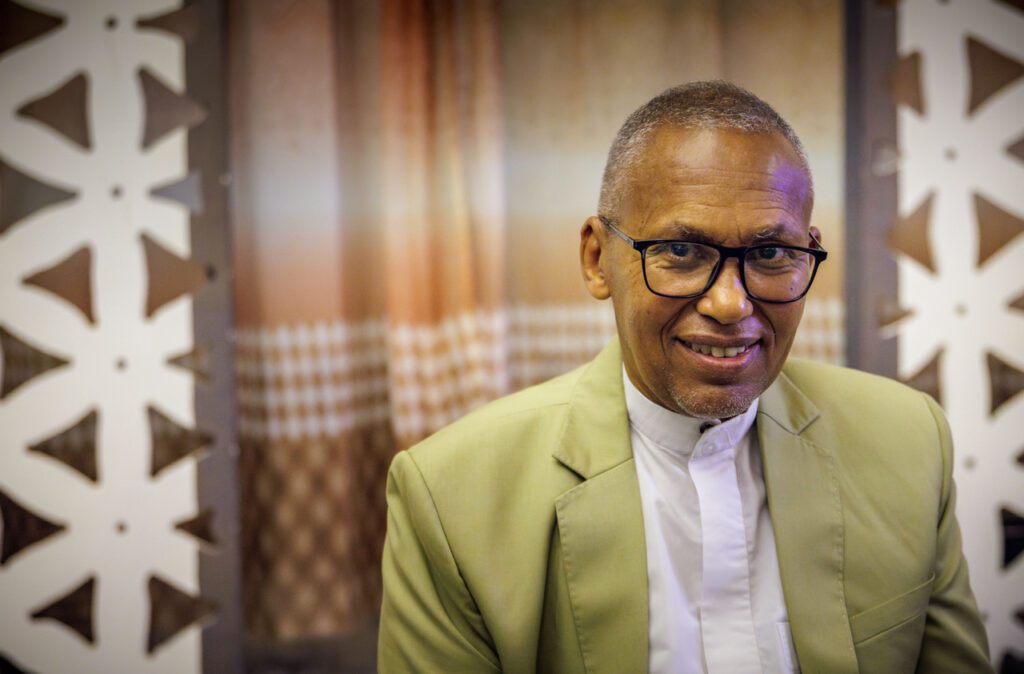
Saad Ali Shire
Saad Ali Shire served as a minister in Somaliland for fourteen years; between 2018 and 2024, he was Minister of Foreign Affairs. During those years, he traveled the world seeking support for the international recognition of Somaliland, a diplomatic campaign that, according to him, often felt humiliating. “Sometimes I felt like a beggar.”
According to Shire, geopolitics in the region is still determined by a simple logic. “The enemy of your enemy is your friend.” At the same time, he warns of the risks of that strategy. “We must be careful. The Emirates have a habit of supporting both sides in a boxing match.”
Guleid Ahmed, a lawyer and formerly affiliated with the Human Rights Centre, a human rights organization in Somaliland, also expresses his reservations about the government’s course. “Our government is playing with fire. The question is whether it is still in control of the match, or whether it has become a helpless victim.”
The Emirates are investing heavily in Africa
The new race for influence in Africa is not just about military presence. The Emirates are also deploying their financial clout. Over the past decade, they have grown into a major trading hub in the Middle East and the third-largest foreign investor on the African continent, after China, the European Union, and the United States.
With billions in investments, they support the governments of financially vulnerable countries such as Kenya, Uganda, Chad, and South Sudan. At the same time, a large portion of the gold smuggled out of Africa reaches Dubai. A significant part of this comes via areas in Sudan controlled by the RSF. Between 2012 and 2022, the Emirates invested an estimated 60 billion dollars in sectors such as infrastructure, energy, agriculture, telecommunications, and transport on the African continent.
The network of Emirati state-owned enterprises plays a central role in this. DP World, one of the world’s largest port operators, manages 87 ports in forty countries. The Dubai-based port giant has invested approximately half a billion dollars since 2016 in the construction and operation of the port in Berbera. DP World now manages ports along the Indian Ocean, the Mediterranean Sea, and the Atlantic coast. Together, they form a network that virtually completely encircles the African continent. In addition, the Abu Dhabi Ports Group is also rapidly expanding its presence on the continent, with projects in East Africa, Rwanda, Congo, Angola, Senegal, Guinea, South Africa, Algeria, and Egypt, among others.
Battle for Ethiopia’s favor
The most coveted partner in Africa is Ethiopia. This country, founded by Queen Sheba, is developing into an emerging medium-sized power with a market of 120 million inhabitants. However, it is forced to import virtually all its goods at high tariffs through the mini-state of Djibouti. “Other port cities in the region fear our competition because we are much more efficient and cheaper than Djibouti,” says Joseph Ogutu, head of the Economic Zone at Berbera, also owned by DP World. “We are best positioned to supply the gigantic Ethiopian market.” Ethiopia, the continent’s second most populous nation after Nigeria, received a high-profile visit last month from Turkish President Erdogan as well as Israeli President Isaac Herzog. Ethiopian Prime Minister Abiy Ahmed is seeking allies to gain access to the Red Sea, which it lost following secession from Eritrea in 1993.
The Emirates’ main rival in the Horn is Turkey. Ankara views the continent as an important area to expand its influence, especially in areas that historically had ties to the Ottoman Empire. Turkey searches for oil and gas off the Somali coast and manages the port of Mogadishu. F-16 fighter jets regularly fly over the city from a Turkish military base near the Somali capital. From that base, Turkey also supplies Bayraktar drones and other military equipment to Ethiopia, weapons that played a significant role during the war between the Ethiopian army and the rebellious Tigray region (2020-2022). At the same time, Turkey supports the Sudanese army in its fight against the RSF, which in turn receives support from the Emirates.
The ship crane in the port of Berbera offers a view in the distance of one of the longest runways in the world, located in the military base run by the Emirates. This is a crown jewel in the international competition around the Red Sea, a race in which even spacecraft play a role. The runway was constructed in the 1970s by the Soviet Union to counter American influence. Following a mutual exchange between their allies Somalia and Ethiopia in the 1980s, the Americans took over the landing strip from the Soviet Union and used it for a potential emergency landing of their Space Shuttle. The Americans withdrew in the early 1990s following the outbreak of a civil war in Somalia.
A topical question is whether the United States will also explicitly intervene in the competition surrounding Berbera, or leave management to its ally, the Emirates. A close associate of President Abdirahman Mohamed Abdullahi already hinted last month that Somaliland is willing to allow American military facilities.
This presents a dilemma for Washington. Open cooperation with Somaliland could put pressure on relations with Somalia, where the United States is conducting airstrikes against the jihadist movement Al-Shabaab from its base in Djibouti. Nevertheless, a high-ranking commander of the US Africa Command recently came to scout the coast near Berbera.
This article was first published in the newspaper NRC in the Netherlands