


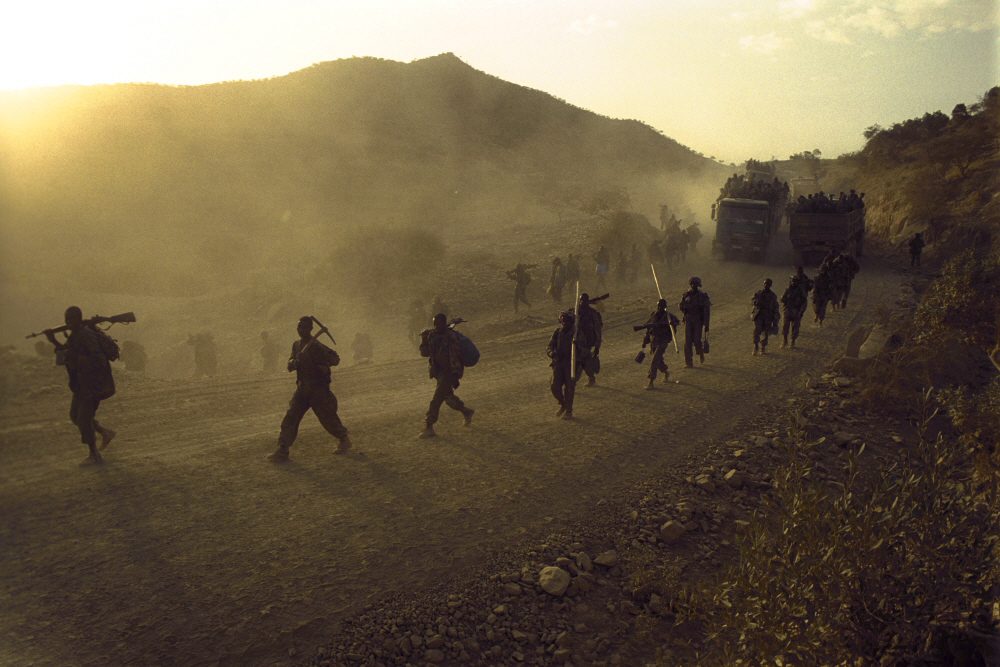
Another war is inflamed in the Horn of Africa. According to Tigray’s regional government the government forces of Ethiopian prime minister Abiy Ahmed on saturday the first of August opened an assault at dawn, advancing from the direction of Shererina near the Sudanese border. A statement from the Tigray regional government in Mekele said: “In response to this horrendous aggression, we call upon all our people—including those in the diaspora—as well as the Tigray security forces, political forces, civic associations, religious institutions, and all concerned organizations and institutions, to stand together in defence of our national survival and existence. Guided by the rallying cry, “We Shall Never Perish,” we call upon everyone to prepare to defend our rights, dignity, and survival”. The fighting lasted all day from approximately 6 a.m. to 5 p.m., according to local and security sources. Many inhabitants fled to Sudan for safety.
The fighting is taking place in western Tigray, a disputed region controlled by nationalists from the neighboring regional state of Amhara. The national government in Addis Abeba has not denied the claims of an attack. In the days running up to the armed clashes, Ethiopian state media ran a campaign accusing Tigrayan leader Debretsion by name of rallying Tigrayans toward war.
To warn for new hostilities in Ethiopia sounds like an understatement. Because not peace but war is always present in this country, thanks to its warlike politicians. It has been like this for centuries. And warnings for a new flare-up have been flying around for months. And allthough the war in 2020 in Tigray came to an end two years later, peace there never was. Not to mention the many other wars in the country -in Amhara state and in Oromia- and the sable rattling of Aby Ahmed in regional conflicts, like Sudan and Somalia. One could easely conclude that Ethiopia is one of the most warlike countries on the continent.
The peace deal of 2022 for Tigray never materialised. The region was starved by Addis Abeba of funds and a fertile part of land it lost in the war has not been returned. The old ruling group in Tigray returned to power and prepared for another round of fighting. In short: The bomb has been ticking for a long time.

The overlapping of the war in Sudan has been obvious for some time as well. On the behest of the United Arab Emirates Abiy Ahmed became an active supporter of paramilitary Rapid Support forces (RSF) in Sudan and by doing so an arch enemy of the government forces in Sudan, led by general Burhan. An investigation by France24 revealed that UAE companies paid for a training camp for 4300 RSF soldiers in Western Ethiopia; they recruit Colombian mercenaries for the RSF; and buy sophisticated Bulgarian and Chinese weapons for the RSF via Ethiopia, Libya, Chad, Uganda, South Sudan and Kenya.
In the Ethiopian famine of 1984 – a direct result of the wars during that time – a million people died. In the Ethiopian Eritrean war around the turn of the century hundreds of thousands died and in the war six years ago more than half a million. These figures are in a way incomprehensible, impossible to envisage so many dead bodies. Any responsible leader would shiver trying to imagine all these footbalfields full with bodies. But in the political clique of Ethiopia there seem to be no lessons learned, no shame, the war rethoric never dies and new conflicts are always planned. It is maddening, really.
Will it happen all over again? Another few hundred thousand bodies? No party has an interest in a new war, all parties have been weakened by the earlier conflicts. But such an analysis needs a kind of rational thinking and that seems to be out of place in the highlands of Ethiopia. So maybe, yes we are on the brink of anther disasterous war. Or maybe not, and it will be postponed for another more opportunistic moment. But the ugly thinking behind all these grandiose powerplay will continue.
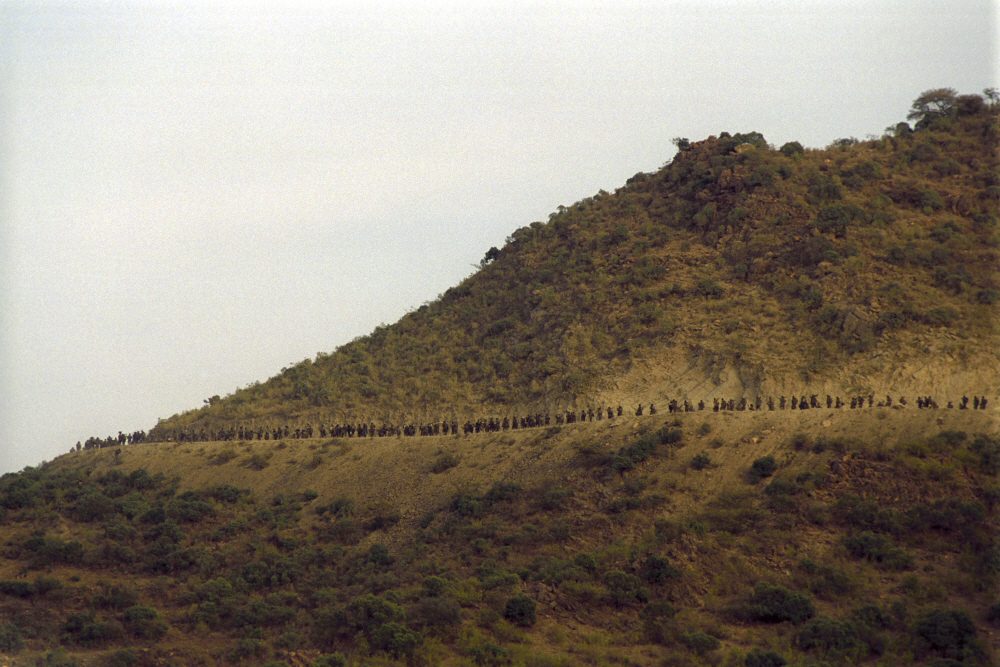
Pictures by Petterik Wiggers, of the war around 2000