By Mathilde Vu (spokesperson for the Norwegian Refugee Council)
What’s the situation like in Sudan? What a daunting question.
How do you describe the indescribable? The slaughter of a country; the starvation of millions; the gang rape of girls, mothers, and grandmothers; the bombing of homes and hospitals; the plundering of childhood; and the killing of a revolution. All in a single soundbite.
“The situation is catastrophic.”
I have almost always responded with that and have always instantly regretted it. As a foreigner with the privilege of a platform that millions of Sudanese lack, describing Sudan in these words feels like an insult.
In a three-minute interview, we manage to convey very few messages. The first minute is about how bad “the situation” is. And that part is all about the numbers: 33 million in need, 12.4 million people displaced, 1,100 days of war, and 220 attacks on healthcare.
As a person who doesn’t do numbers, I have always wondered how the audience perceives them. Do they even make sense? Does the magnitude resonate when the figures are that high? Twenty million people, struggling to have two meals a day, is more than the population of New York City – but even that comparison feels abstract.
The numbers we have barely begin to tell the story of this war, especially as the most critical one – the number of civilians killed – remains impossible to determine and is vastly under-estimated.
There’s an ethical and moral duty that comes with telling these stories, especially in the way we relay them, and I think none of us has managed to live up to it. Including myself.
So, we proceed to minute two: the human angle. For me, this is the bit that invokes the most responsibility. We aid workers – and maybe more so foreigners? – are being entrusted with the most traumatic, intimate, and painful stories of the people we meet.
There’s an ethical and moral duty that comes with telling these stories, especially in the way we relay them, and I think none of us has managed to live up to it. Including myself.
Sometimes, a collective experience makes the headlines. In El Fasher, families survived on boiled leaves, animal feed, and even cow skin that they scavenged in destroyed slaughterhouses during the siege. That story was run many times.
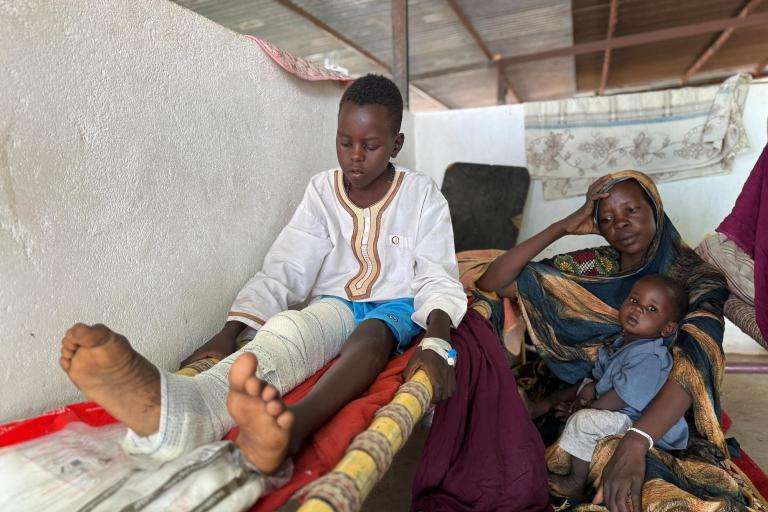
The individual ones feel even heavier. I have often shared the story of a 32-year-old woman in Tawila in Darfur who held my hand for a while before I realised that three of her fingers were missing – the consequence of a drone strike that hit her home and killed her two kids. There, in the camp, she was taking care of two other children – her niece and nephew – because their own mother, her sister, had been killed while trying to flee El Fasher. I often hoped this story landed in the ears and hearts of whoever listened, so that it was not shared with me in vain.
If I had more than a minute, and if Sudan were more than a headline, I would also share stories that feel close to me. How my friend Reem in Tawila can only speak in slam poetry when she talks about her escape from El Fasher and the killing of her loved ones – because poetry helps her cope. How my colleague Wageehallah, trapped in Kadugli in South Kordofan for over two years of siege, organises gratitude sessions with volunteer teachers, so they have a space to process the distress they see in children. How Chef Wardani in Gedaref describes how to make French pastries like they are the most beautiful pieces of art, while he cooks lentils for hundreds of families who live with him in a camp. I wish the audience could have met him. I had never cried about pastries before.
But the second minute is over.
The third almost always features the same final question: “Why is Sudan forgotten?”
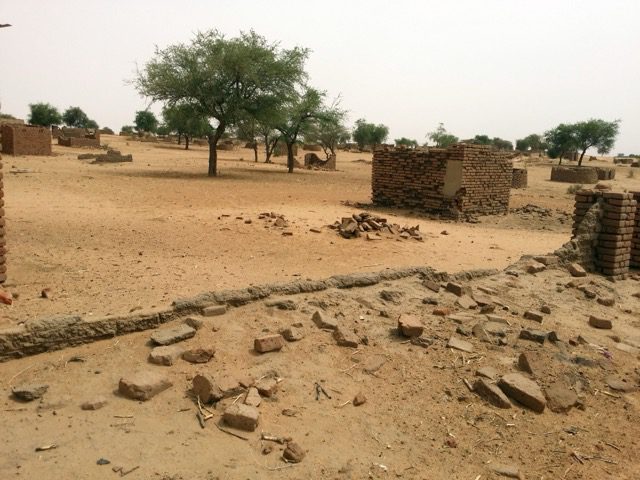
Is it? In my time working in Sudan, I never saw forgetfulness: 51 million Sudanese inside the country and millions more scattered to every corner of the globe can’t forget. Crowds of Sudanese activists, lawyers, doctors and human rights defenders are on social media, dedicating their entire lives to ensuring the world does not forget about what’s unfolding in the country. Satellites have caught bloodshed from space and atrocities have gone viral on TikTok, recorded by the very men who perpetrated them. It’s all always been in plain sight.
Newsrooms must do better. So many times, it’s about the belligerents, military advances, and the offensive and counteroffensive. People are erased, along with their stories and the violations they have survived – or have not.
Forgetting is unintentional, but neglect is a political choice. And neglect is what we see in Sudan.
Off the record, this is what I wish I could add: Newsrooms must do better. So many times, it’s about the belligerents, military advances, and the offensive and counteroffensive. People are erased, along with their stories and the violations they have survived – or have not.
Many journalists I work with struggle to pitch a visit to Sudan: “It’s not worth the time or the cost.” Many Sudanese journalists are only fixers, rather than correspondents, without the means and recognition to do their work safely. We need more ground reporting and raw testimonies, not just my talking points. We need coverage that instils outrage and shock in its viewers.
Breaking through the apathy will require more effort, from all of us. Because, for now, one of the most used hashtags on X is only calling to #KeepEyesOnSudan. How low of a bar is that?!
The Sudanese deserve so much more:
-A public outcry: viral indignation, protests in the streets, and letters to elected representatives calling out governments and demanding that they act.
-Urgency: immediate high-level political pressure to end the bloodshed and protect civilians.
-Respect: accountability for the crimes committed and consequences for their backers.
-Action: meaningful, large-scale international aid, and not just the bare minimum to survive.
Wait, I need a few more minutes.
“But that’s all we have time for now, thank you for joining us.”
This piece was first published by the New Humanitarian