Koert Lindijer has been a correspondent in Africa for the Dutch newspaper NRC since 1983 to 2026. He is the author of four books on African affairs.
I am writing a new book. About African affairs, in which I have artists reflect on matters around them, and in which I contrast justice and gender today with how things used to be. I draw on 42 years of journalistic work on the continent and life in the Samburu district in Northern Kenya. Over the coming months, I will offer a sneak peek here. Until the book is fully finished.
Let us begin with the great painter Shabu Mwangi.
Without art, I wouldn’t have survived
The alley leading to the house of modern painter Shabu Mwangi is trampled with garbage and bordered by mud, into which pig snouts protrude, turning the animals black. An anthill-like density; every meter counts in the Mukuru slum, the passages so oppressively narrow that passersby squeeze past one another. Children roll a bicycle tire in the muck past a man with a colored mane of hair made from discarded wigs. Salons advertise nail cleaning, small churches the cleansing of the soul.
Don’t expect a rose field as a reflection from artist Shabu Mwangi; with him, this raw and rugged reality resonates in his art. His house in Mukuru used to be a public bathhouse and toilet; now he rents out rooms there and built a studio for himself on top, where the pounding sun creates oven-like temperatures. The tall and shy Shabu Mwangi is gentle, an empathetic man. Mukuru broke him but did not defeat him. “Without art, I wouldn’t have survived. With art, I capture on canvas what bubbles up inside me. Since I started painting, I have been able to express what I feel, and I realized how empty my existence was.”
Behind the façade of skyscrapers in Nairobi’s city center and rustic avenues filled with jacaranda’s in the chic suburbs lies the raw reality of the modern African city: numerous ghettos where poverty breeds ugliness and violence. One side of Nairobi displays the beautiful business district, with tall office buildings, government buildings, many international organizations, and above it the Expressway, a toll road built on concrete pillars for the wealthy. This symbolizes a young, successful nation with a growing middle class. On the other side are the slums that symbolize failure. Along with South Africa, Kenya has the greatest inequality on the continent.
Mukuru borders the industrial area, Inda in sheng, a slum language of those who scrape their incomes from the streets. Here on the city’s outskirts lies a grim world cut off from the solidarity of the countryside and disconnected from the cultural and political life in the center. The slums are a zone of exile, a new Babylon that provides the continent with the radical new face of inequality. Africa is experiencing urbanization without growth, caused by the reproduction of poverty, not by the supply of jobs.
“I grew up here as a hunted child. I was always terrified. In Mukuru, no one considers themselves immune to crime; forty percent of all criminals die prematurely from violence, murdered by the police or fellow criminals. Being alive in Mukuru means you have defied those challenges. That creates a bond with the other survivors.” To which Shabu Mwangi adds, with a cynical undertone: “I’ve climbed over a factory wall myself, you know. I also sold stolen goods. But I knew that this had to lead to my death someday.”
Violence comes from all sides, from militias, malicious police officers, and increasingly from gangs paid for by politicians. Such crime did not exist in the past; long ago, everyone owned a piece of land somewhere to work on. “Our parents were wheeler-dealers, but they did not steal; they retained a glimmer of the joy after the departure of the colonialists. They remained optimistic and expected a better future. That is why they bought schoolbooks for us.” This stands in contrast to the present: the inhabitants of a ghetto no longer harbor hope; reality quickly catches up with every young person and shatters their dreams. “You cannot dream in slums, because you are always naked, you never feel protected, you are surrounded by scavengers. The deepest darkness is where all hope for change has gone.”
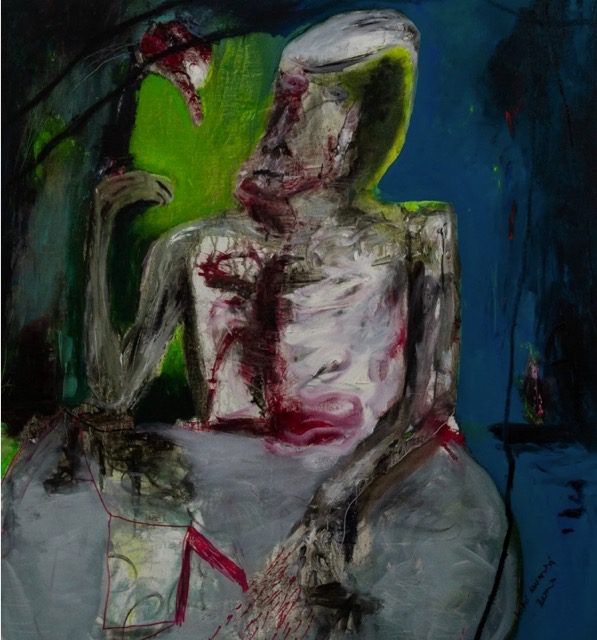
Shabu Mwangi was lucky; he ended up at a school where his exceptional talents stood out, and he was subsequently discovered by curators of art galleries in Nairobi’s chic city center for “his art with a story.” “Fortunately, we have art,” he smiles. Without formal art training, he began painting in 2004 and helped found the Wanjuku art collective in Mukuru. Six of the nine founders of that association have since been killed violently.
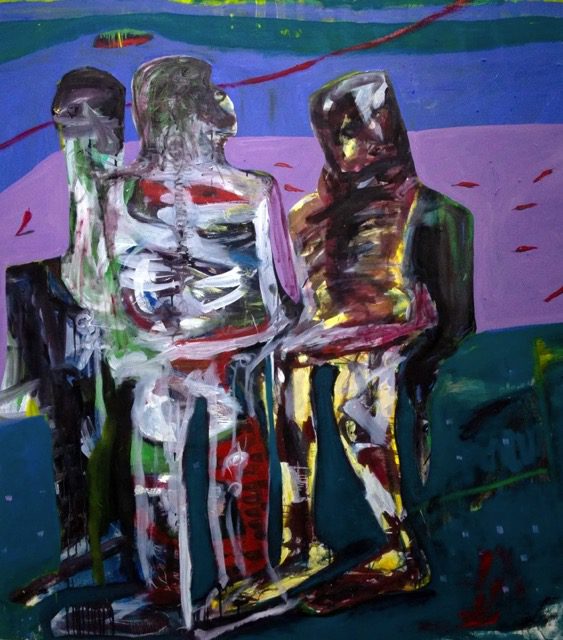
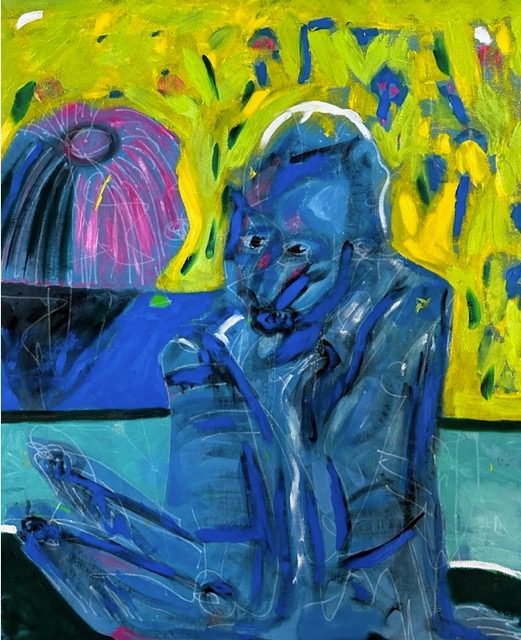
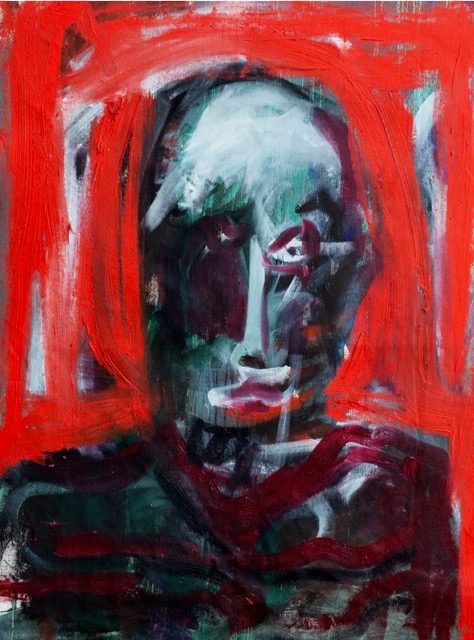
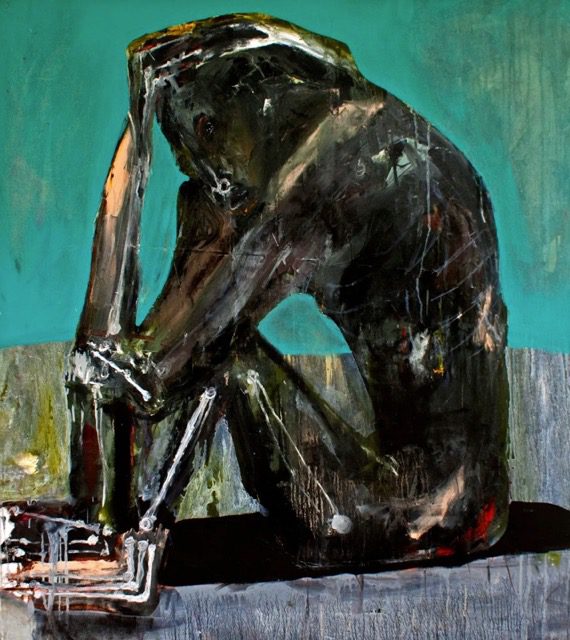
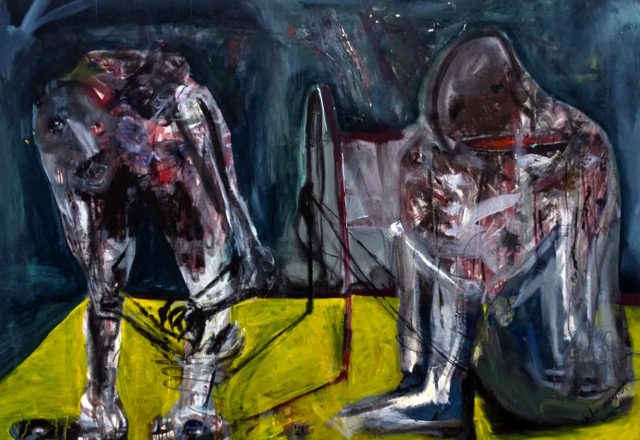
Structural injustice—Shabu Mwangi expresses it in his portraits, in his own way, confusing and intense, always with great intensity. “Some say I paint ghosts,” he chuckles. His distorted figures, stripped of their humanity, indeed resemble ghosts that take on different forms depending on the painter’s mood. And should the viewer lose their way in the abstract forms, there are always those penetrating eyes as a point of reference.
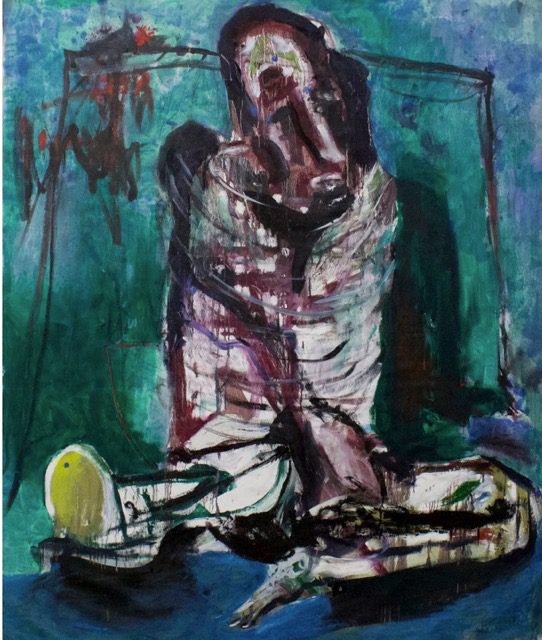
“There is no way to explain a painting; it is an accumulation of emotions. Everything is an illusion.” Colourful distorted faces, with a cheerful hue now and then, so as not to lose hope. We look at Fear of being a man, a portrait of a tense man, at Layers of personality disorder, State of Nothingness, and the self-portrait Distorted self. “I didn’t feel well at that time. If a man’s role is to suffer, am I man enough, I wondered.” In Fallen not broken, a man sits dejected on the ground, as if surrendering to his miserable fate. “There is no escaping the slums.”
Is there never a moment of happiness, does Shabu Mwangi never feel the need to use cheerful colors?
“How can I paint happiness if I experience it only for a brief moment? Yes, there is love in misery, but the eye of the needy cannot see that.”