By Nisar Majid
In Somalia and the region, conflict and political instability continue. The federal government still has limited reach and authority, and the islamist group al-Shabaab is still entrenched.
Political elites at federal and state levels are seen to be corrupt and at odds with each other.
Over the past three years, my work with the PeaceRep Somalia programme at the London School of Economics has sought to deepen understanding of this situation in order to better inform policy responses.
Two themes stand out:
• checkpoint governance, or the control of movement – goods and people – by different political authorities
• the control, mismanagement and manipulation of international aid.
We found that political elites and their business allies at both federal and member state levels benefit from corruption associated with international assistance. They also benefit from the rents generated at the various “chokepoints” (seaports and road-based checkpoints) along Somalia’s transport corridors.
At the same time, the international community advances its own priorities on counterterrorism, anti-migration, development and humanitarian objectives. And al-Shabaab taxes, regulates and extracts from the entire complex.
I argue that Somalia has settled into a situation which brings questionable benefits to the majority of the public, exploits displaced people, and positions al-Shabaab as a credible alternative to the official government.
Somalia’s chokepoints
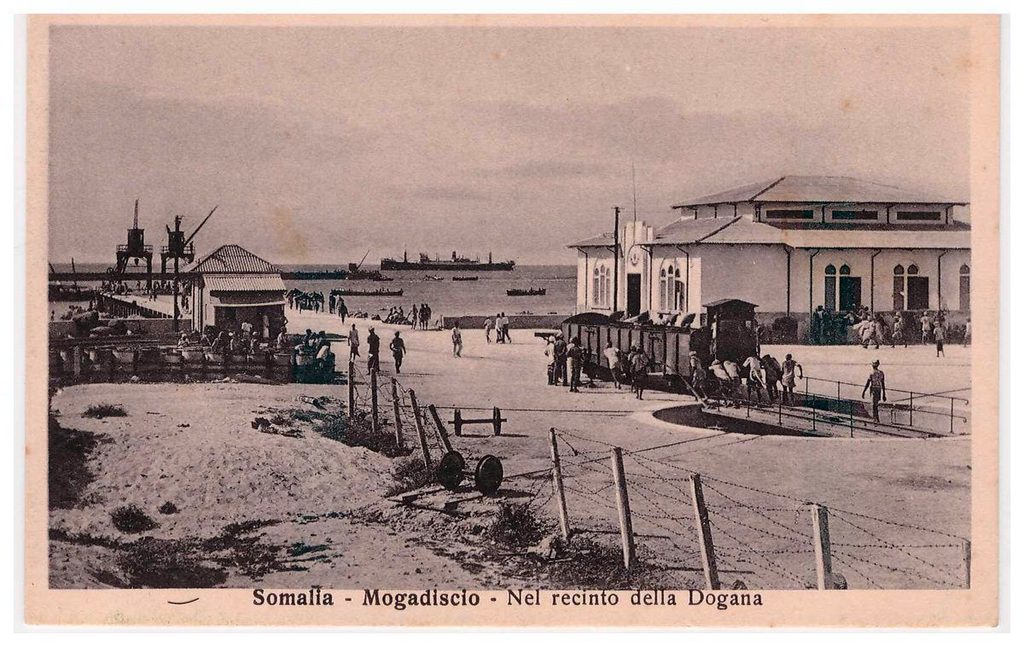
Somalia has the second longest coastline in Africa – about 3,000km. The country’s major and minor seaports and landing beaches act as both avenues and chokepoints for international trade. The main export is livestock. Imports include food, electrical and electronic goods, clothes and construction materials.
This trade infrastructure links markets in the Gulf and Asia with those in the Horn and east Africa. Taxes are extracted at the entry points – including Berbera, Bosasso, Mogadishu and Kismayo ports – and on the interior roads. These taxes, formal and informal, make up a big part of the revenue generated in the country.
The recipients of these revenues include the federal government, the more autonomous federal member states – notably Jubbaland and Puntland – and al-Shabaab. This enables all these players to continue as they are.
Our research has shown how control over chokepoints has been central to political power in Somalia. It also shapes alliances between local elites and external actors like Ethiopia and Kenya.
Somalia’s business-political elites and al-Shabaab continue to profit from the way things are. Meanwhile large proportions of the population see little benefit or, in the case of internally displaced people, see aid diverted.
Manipulation of external aid
Somalia receives significant amounts of international aid for humanitarian, development and security needs. Since 2010, Overseas Development Aid has averaged US$1.6 billion annually, reaching approximately US$2.5 billion in 2024. The aid is channelled through project contracts – typically for hiring staff, construction, security, vehicle hire, offices and accommodation. All of these are highly susceptible to aid diversion and corruption.
One of the worst forms is the exploitation of internally displaced people, who are some of the main recipients of assistance. This is typically carried out by chains of “gatekeepers” who claim some of the humanitarian cash to allow access to camps. Religious leaders have spoken out against this practice.
Development aid, which supports a range of activities from institution building to public services, is no less subject to capture and abuse but is much less publicly exposed. This is partly because development actors are much better able to hide their dirty laundry. This is particularly important currently as, with the global reductions in humanitarian aid, the World Bank continues to run a large programme supporting state institutions and social protection. The security sector is even more opaque but just as susceptible to elite capture.
The core issue for me is the lack of acknowledgement that aid is diverted systematically.
The result is that external aid givers advance their own priorities but do not fully acknowledge or systematically address their role in the diversion of resources that sustain this predatory system.
The losers in this arrangement are the general population. Many see al-Shabaab as a credible alternative to the official government leadership, incumbent or opposition.
What should be done?
International donors must not just engage with elites. They must identify, engage with and support inclusive Somali-led dialogue processes. Engagement must create space for diverse voices and interests across society (including al-Shabaab). It must hear what civic networks, women’s groups, business communities and religious scholars have to say.
This article was first published by the Conversation